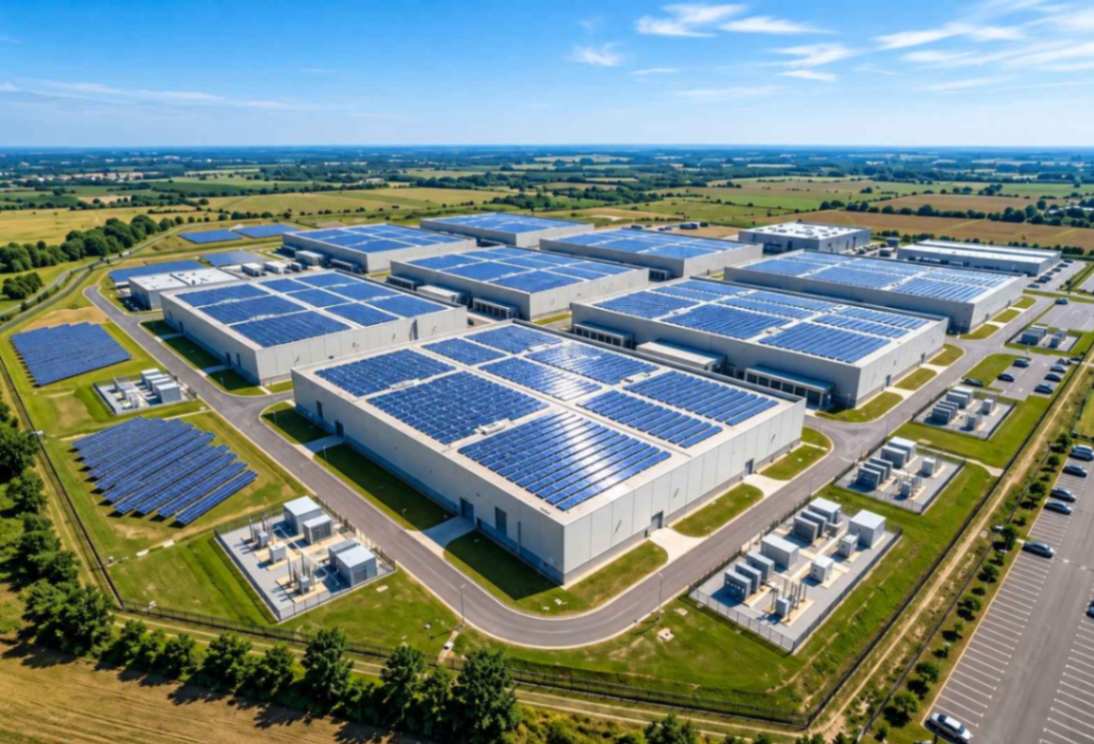
Manufacturing leaders are asking a practical question: “Can solar lower electricity costs without affecting production?” The answer depends on how a plant uses power, not simply how much roof space it has. Textile, pharmaceutical, and automotive facilities have different operating patterns, so the value of solar can look different in each one.
A textile unit may have daytime process loads, while a pharma plant can have major demand from cooling and air-handling systems. Automotive facilities may use electricity across several production areas. Understanding these differences helps plant heads, energy managers, and finance teams assess solar using their own operating data.
This blog explains where solar can fit across the three sectors, what affects the savings, and what recent industrial projects can show about putting solar into practice.
Why Industrial Solar Power Systems Fit Manufacturing
Industrial solar power systems use photovoltaic (PV) technology to convert sunlight into electricity. At a factory, that electricity can serve part of the plant’s demand, reducing the amount of power it needs to buy from the grid. The overall fit comes when solar generation overlaps with daytime electricity use.
This is known as self-consumption: using solar electricity at the facility instead of sending it elsewhere. A load profile shows how much electricity a plant uses at different times. Both matter because solar output changes while factory demand follows production schedules.
How Can Three Industries Use Industrial Solar Solutions Differently?
Textile, pharma, and automotive plants all use solar differently because their production processes and electricity demand vary. Looking at each sector’s operating pattern helps manufacturers see where solar generation can align with daytime loads and support direct electricity use.
Textile: Match solar with daytime production
The Bureau of Energy Efficiency (BEE) identifies daytime production activities and rooftop solar as relevant opportunities for textile units. When solar generation overlaps with production, the plant can use more electricity and reduce grid purchases. This can support renewable energy for textile industry goals while contributing to industrial energy cost reduction.
For textile businesses, roof size is only one part of the assessment. Production schedules, electricity demand, shading, and electrical infrastructure also matter.
Pharma: Power the systems behind controlled production
BEE’s pharma-sector energy assessment identifies air-handling units, compressed air systems, pumping systems, and vacuum pumps as significant electricity-consuming utilities in MSME pharma units. These systems support production environments and processes, so their operating schedules matter when assessing solar potential.
For a pharma plant, the focus should be on when electrical loads operate and how much generated solar power can be consumed on site.
Automotive: Support electricity-intensive production areas
Automotive plants also have varied electrical demand. BEE’s solar technology mapping identifies press, body, and assembly shops as areas for solar electricity use. These production areas can help teams assess where solar generation could support manufacturing demand and contribute to renewable energy for automotive industry adoption.
Enerparc implemented a 2.5 MWp rooftop solar solution for Honda in Narasapura, Karnataka. The project provides an automotive example, but its capacity shouldn’t be treated as a standard for every factory. System size depends on electricity demand, available installation area, site conditions, and electrical requirements for solar power for industrial operations.
What Determines the Savings from Commercial and Industrial Solar at Your Facility?
The financial result of industrial solar power systems depends on several connected factors. These factors determine how much solar electricity a facility can use, how much grid power it can displace, and how the project performs financially over time, including its potential for manufacturing energy cost savings:
- Electricity tariff: The price of grid electricity that solar can displace.
- Load profile: When the facility uses electricity, particularly when evaluating solar power for factories.
- System size: The capacity that fits the site’s demand and technical limits for industrial rooftop solar systems.
- Self-consumption: How much generated solar power the facility can use directly.
- Roof and electrical conditions: Available area, shading, structural suitability, and electrical infrastructure before selecting a project design.
- Project model: The approach used to generate or procure solar power.
These factors need to be assessed together. A large roof doesn’t automatically mean greater savings, and fixed industry-wide percentages can be misleading because tariffs, operating schedules, and site conditions vary.
Teams can start with electricity bills, operating hours, demand patterns, and electrical loads. A technical site assessment can then help determine system size and installation approach.
For larger facilities, the available roof may not cover the full electricity requirement. Businesses can also evaluate other renewable power arrangements where applicable. India’s Green Energy Open Access framework provides access to green energy for eligible consumers subject to the applicable rules, making renewable procurement another consideration for larger industrial sites, including open access solar and captive solar power solutions.
The data reviewed can differ by sector: textile teams may focus on production schedules and rooftops, pharma teams on major utilities, and automotive teams on production-area demand and electrical infrastructure before selecting a project design.
What Real Industrial Projects Show
Recent industrial projects provide useful context without creating a universal savings benchmark. In April 2026, Mercom reported that Bombay Dyeing commissioned a 2.5 MW rooftop solar project at its Rasayani facility in Maharashtra. The project is expected to generate approximately 3.6–3.8 million units annually and reduce electricity costs by around 35–40%. These figures are project-specific expectations, not a standard result for every textile facility.
As mentioned above, Enerparc did a 2.5 MWp rooftop solar solution project for Honda in Narasapura, Karnataka. Together, these examples show how rooftop solar can be applied across different manufacturing environments, with project capacity and design shaped by each facility’s needs.
Designing Solar Around the Way Your Plant Operates
Industrial solar power systems work best as a plant-specific energy decision rather than a standard package. Textile, pharma, and automotive businesses can begin by reviewing electricity use, operating schedules, tariffs, available installation space, and technical conditions. These inputs help teams understand how much solar electricity a facility can use and what project structure fits its operations.
Real industrial projects also show that solar is already being deployed across manufacturing settings in India. For businesses evaluating industrial solar power systems, the next step is a detailed assessment of the facility’s demand and site conditions. For plant leaders, this means treating solar as part of energy planning, not as a standalone installation.
A well-matched system can support cost management while helping facilities make progress toward cleaner, more resilient operations over time, too. It also gives finance and operations teams a basis for comparing project options, expected generation, and potential long-term energy benefits.
Frequently Asked Questions (FAQs)
1. How does solar energy reduce electricity bills?
Solar energy reduces your electricity bill by supplying part of the power your facility needs during the day. When your plant uses solar electricity directly, it needs to buy less power from the grid. Your actual savings depend on your electricity tariff, solar generation, load profile, and self-consumption.
2. How much roof space is needed for rooftop solar?
As a general planning estimate, you’ll need around 80 to 100 square feet of usable, shade-free roof space for every 1 kW of rooftop solar. The actual requirement can vary based on panel efficiency, layout, roof structure, access space, and other site conditions.
3. Do solar panels stop working after 25 years?
No, solar panels don’t simply stop working after 25 years. Their electricity output gradually decreases over time because of natural degradation. Many panels have performance warranties covering around 25 years, often guaranteeing a defined level of output. With proper maintenance, panels can continue generating electricity beyond that period.
4. How to choose the right size solar system?
To choose the right solar system size, start with your facility’s electricity bills, daytime consumption, operating hours, and load profile. Then consider available roof space, shading, electrical infrastructure, and your target for solar generation. A technical site assessment can help match system capacity with your actual energy requirements.
5. Which solar system is better, on-grid or off-grid?
For a facility that already has a reliable grid connection, an on-grid solar system can be suitable because it works alongside the existing electricity supply. Off-grid systems are designed for situations where grid power isn’t available or reliable and generally require energy storage. Your choice should depend on your facility’s power needs.