13 Nov 2026
8 min read
Once your solar plant is commissioned, who is responsible for keeping it in good condition? Do you know which checks are planned, how faults are reported and who approves repairs? These details matter when you manage an asset that must serve your facility over many years.
Solar energy companies may offer different levels of support, so a clear scope of work is essential. Understanding operations and maintenance helps you define responsibilities, review service quality and make better decisions about your plant. Here’s what to consider before and after your solar system becomes operational, with fewer gaps in day-to-day oversight.
Solar operations and maintenance (O&M) covers the work needed to run a photovoltaic (PV) plant. Its modules convert sunlight into electricity. The maintenance needs may vary across ground-mount solar, rooftop solar, and carport solar solutions, as each system has different site conditions and equipment.
Operations means supervising plant performance. Maintenance means checking, cleaning, testing and repairing equipment. These services are also important when assessing solar energy companies for long-term plant support.
Preventive maintenance finds issues before failure. Corrective maintenance restores equipment after a fault. Predictive maintenance uses data to spot early signs of failure.
Your O&M plan should define the services, responsibilities and reporting process.
It should also state how urgent faults are escalated, who approves extra work, and how maintenance activities are recorded.
Several issues can reduce your plant’s electricity output.
Each issue needs a different response. Solar panel cleaning won’t fix an electrical fault or shading. When an alarm appears, ask your O&M team to identify the root cause, record the affected equipment and confirm the repair. Clearing an alarm alone doesn’t show that the underlying problem has been fixed.
Set your maintenance schedule around plant design, equipment manuals, site conditions and safety rules. Ask your team to check:
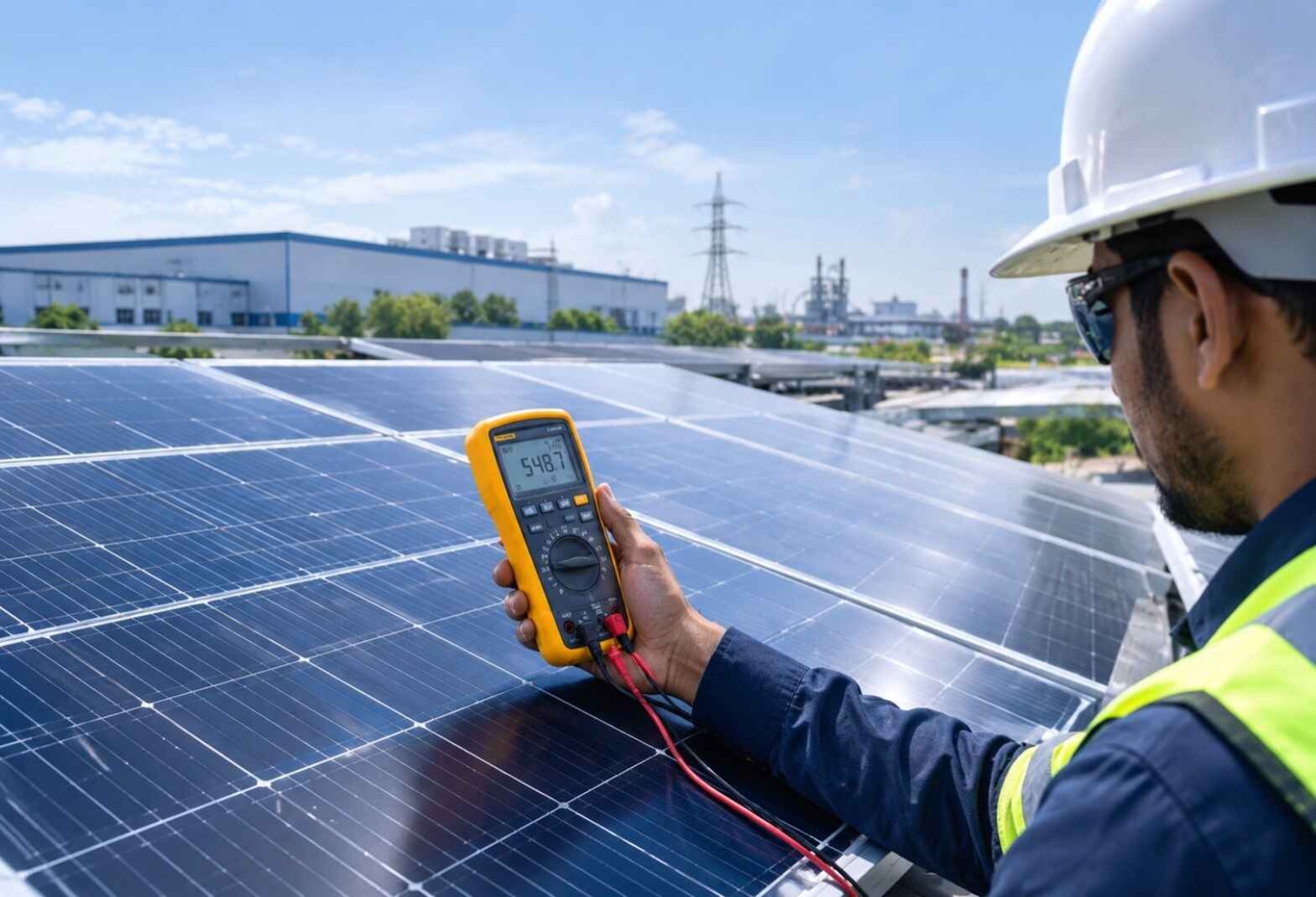
Ensure trained staff follow safe procedures and record findings. Thermal imaging and electrical tests can reveal faults a visual check may miss.
Monitoring helps you track performance between site visits. Compare actual and expected generation, allowing for sunlight, weather, module age and severe weather. A cloudy period alone doesn’t prove that equipment has failed.
Two measures help you assess results. Read them together, because neither one gives a complete picture of energy delivered over time.
The US Department of Energy identifies both as key PV indicators. Review trends rather than one low reading. For example, a repeated output drop from one inverter can help your team focus its inspection on the affected equipment. Monitoring guides that investigation; it doesn’t replace physical checks or repairs.
Your location affects maintenance needs. Dust, pollution, heat, humidity, rainfall, wind and salt can affect modules, electrical parts and structures. These factors should also shape the solar energy solutions selected for your facility. When evaluating the top solar EPC companies in India, check whether they account for these local conditions in their project design and maintenance plans.
A plant near an industrial site may face more dust, while a coastal site may need closer corrosion checks. IEA PVPS’s 2025 report examines climate-related stress on solar PV systems, including high temperatures, thermal cycling, strong winds and salty mist. After severe weather, arrange a safe inspection for water entry, loose structures and visible damage. Follow site safety rules before anyone enters the plant.
Solar modules lose performance as they age. The US Department of Energy cites a degradation estimate of about 0.5% per year. Treat this as a broad reference, not a guaranteed rate for your project. Actual performance depends on the system’s age, location and conditions, which can also affect the lifespan of a solar panel.
Maintenance can’t stop natural ageing. It can help you find corrosion, overheating, water entry or loose parts before they cause further damage. Inverters, cables and structures also age, and may need repair or replacement on a different timeline from your modules.
Use performance trends and repair history to plan component replacement, warranty claims and future maintenance budgets.
Before signing an O&M agreement, confirm who handles each task and how the team reports its work. Your agreement should define the following points and list any exclusions:
Ask how the provider measures alarm acknowledgement, site attendance and fault resolution. SolarPower Europe’s 2025 O&M guidelines define separate KPIs for solar plant performance and O&M service quality. These include performance ratio, technical availability, acknowledgement time, intervention time and resolution time. Use them to assess whether your provider meets agreed duties.
Also clarify how events outside the provider’s control, such as grid outages, will appear in reports. A clear agreement helps you review service quality and understand delays. The best solar energy companies in India should be able to explain their service commitments clearly.
A clear O&M plan helps you make informed decisions about your plant’s performance and upkeep.
Your solar plant needs more than a successful solar energy installation to deliver reliable energy over the years. Regular inspections, performance monitoring and timely repairs help you identify issues, manage equipment ageing and maintain generation.
With a clear O&M plan, you can make informed decisions about your plant’s upkeep and long-term performance. At Enerparc, we believe effective solar preventive maintenance supports the wider goal of making clean energy more reliable for businesses.
Write to us here, schedule a consultation, or call (+91) 80-4941-4941 to discuss your solar O&M requirements and plan your next steps.
Your solar PV system needs regular performance monitoring, module cleaning when soiling affects output, and checks of inverters, cables, connectors, mounting structures and safety devices. You should also arrange fault repairs, keep maintenance records and follow equipment manuals, warranty terms and site-specific safety rules, including checks after severe weather.
A solar operations and maintenance plan sets out how your solar plant will be monitored, inspected and repaired. It should list each task, how often it’s done, who’s responsible, safety steps, reporting needs and fault response times. The schedule should reflect your equipment and site conditions.
Cleaning removes dust, bird droppings and other deposits that block sunlight from reaching your solar modules. If soiling is reducing output, removing it can help restore energy generation. A site-based cleaning plan also helps you avoid unnecessary water use, labour and cleaning that could damage panels.
You should inspect your solar panels and the wider system at intervals set by the equipment manuals and your O&M plan. Check performance data regularly for unusual drops, and arrange physical inspections based on site conditions, such as dust, storms or nearby construction. Qualified staff should handle electrical checks.
Rain can wash away some loose dust, especially on tilted renewable energy solar panels, but it may not remove bird droppings, oily dirt or stubborn deposits. Check your system’s output and panel condition rather than relying on rain alone. Arrange safe, approved cleaning when soiling affects performance and follow the manufacturer’s cleaning guidance.