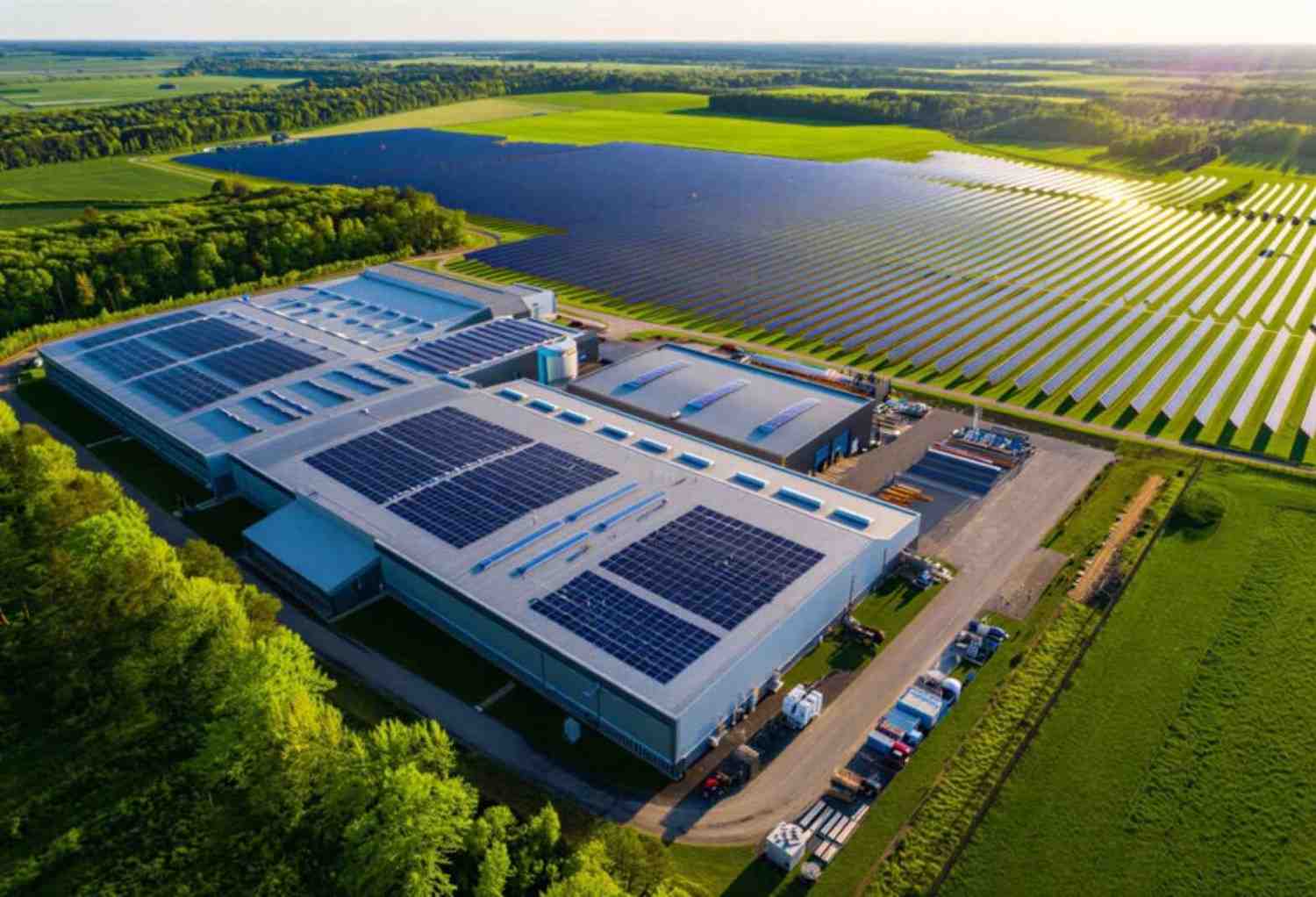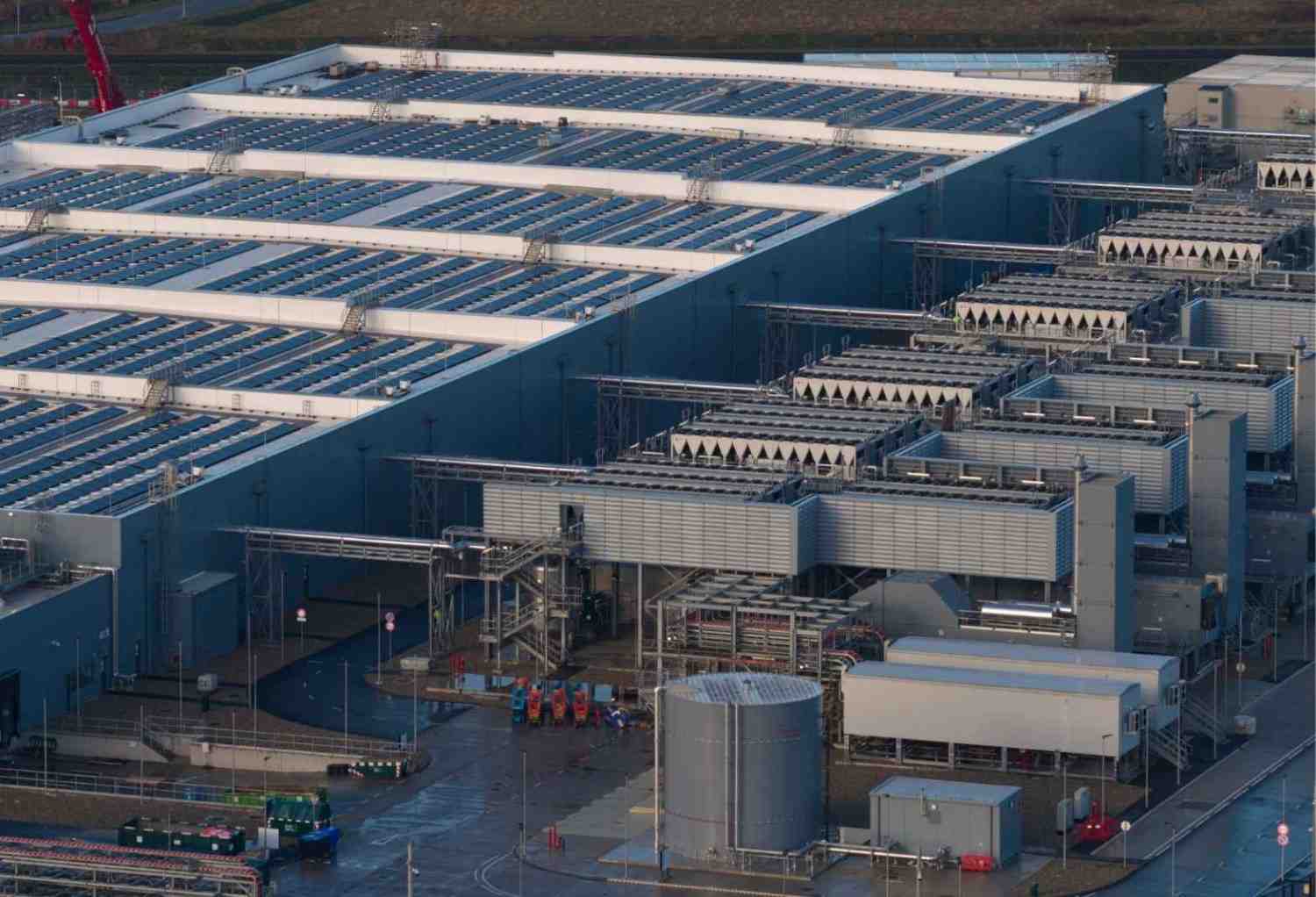
AI is changing how much power data centres need and how quickly that demand can grow. The IEA estimates global data centre electricity use reached 485 TWh in 2025. It expects that figure to nearly double to around 950 TWh by 2030. AI-focused data centres are expected to see even faster growth during this period.
That growth creates a difficult power challenge for data centre operators. AI workloads need reliable power around the clock. Renewable generation varies throughout the day. Data centre capacity can grow within a few years. Energy infrastructure often takes longer to plan and build.
So, can renewable energy for data centres support this demand at scale?
Yes, but adding renewable capacity alone isn’t enough. Generation, storage, grid access, and procurement must work together to meet the facility’s power needs.
Why Is AI Creating a New Power Challenge for Data Centres?
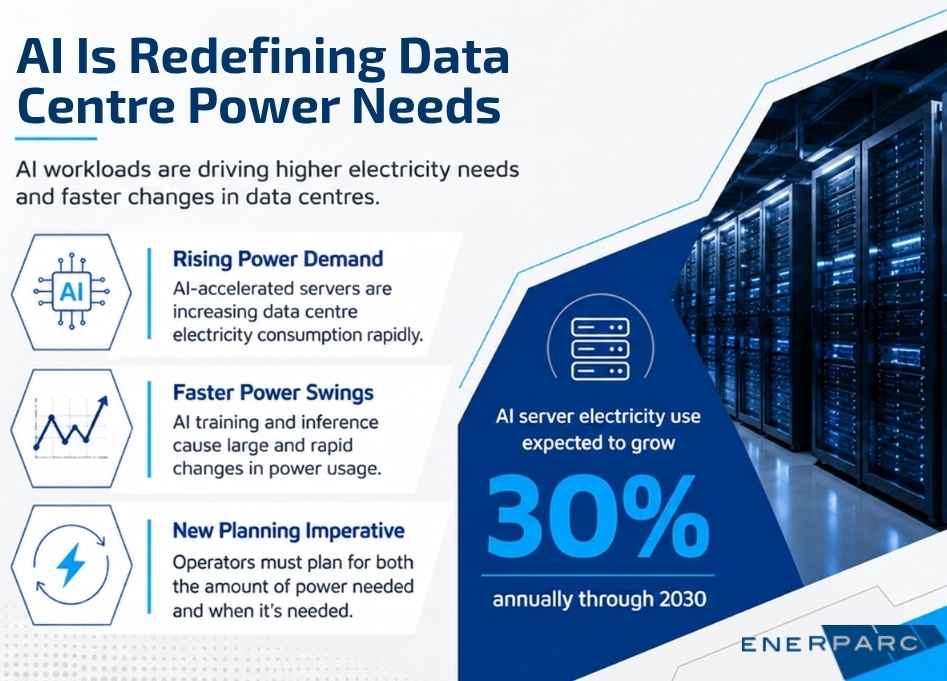
AI workloads are increasing electricity demand and power density inside data centres. The IEA expects electricity use from accelerated servers to grow by around 30% a year through 2030. These servers mainly support AI workloads. They will drive much of the future growth in electricity demand.
AI workloads can also make data centre electricity demand change quickly. Traditional computing workloads tend to be more stable. The IEA notes that AI training and model use can create large and rapid power swings. Storage can help manage these power swings.
That changes how operators should approach renewable power procurement. They need to consider how much electricity they use and when they need it.
Can Renewable Energy for AI Data Centres Provide 24/7 Power?
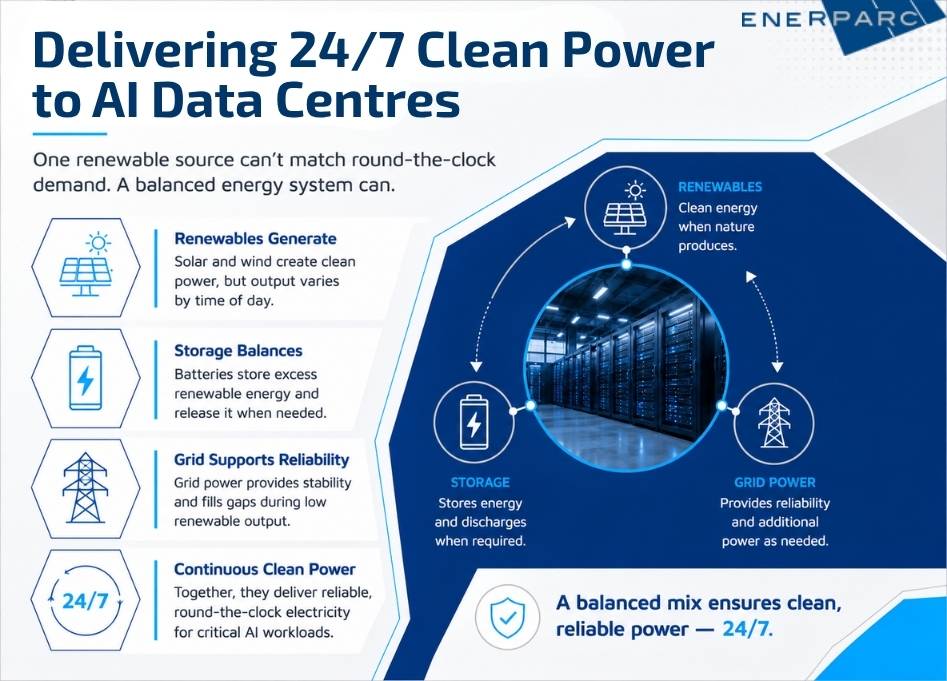
Yes, but one renewable source can’t reliably meet continuous data centre energy demand.
Solar generation changes with daylight. Data centres operate day and night. Storage and other power sources can help manage this mismatch.
This is why renewable energy for data centres should match the facility’s demand profile. Matching annual electricity consumption doesn’t guarantee renewable supply during every hour.
“The challenge is matching 24/7, rapidly growing and highly reliable loads with intermittent renewable generation,” says Harish Kumar, AGM, Enerparc.
The difference matters as AI workloads increase power requirements. The goal isn’t simply to add more renewable generation. It’s to create a supply strategy that closely matches demand.
What Does a Scalable Renewable Energy Mix for AI Data Centres Look Like?
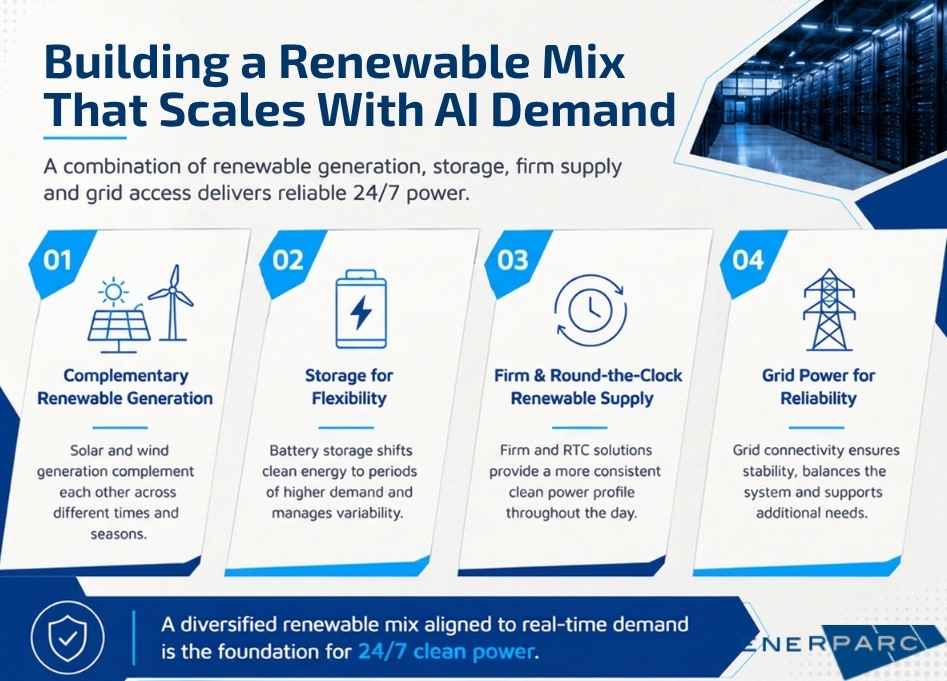
1. Solar and wind can provide complementary generation
A solar-wind hybrid can provide a broader renewable generation profile across different periods. This can reduce reliance on one variable generation pattern.
Enerparc sees solar-wind hybrid solutions as a practical option for India’s growing data centre sector. These solutions can help renewable energy integration in data centres as power demand grows.
2. Battery storage bridges generation and demand
Battery storage can shift renewable electricity toward periods when demand is higher. It can also provide flexibility when renewable generation changes during the day.
The IEA identifies storage as an important option as AI increases data centre power demand.
For data centres, this makes storage more than a backup resource. It can help balance renewable generation with the facility’s electricity demand.
The right storage strategy should reflect the facility’s actual data centre power consumption pattern. The system should reflect hourly demand and peak requirements. It should also account for renewable generation and grid availability.
3. RTC and FDRE solutions add firm renewable supply
Round-the-clock, or RTC, renewable power provides a more consistent supply. This makes it more reliable than variable generation alone. Firm and dispatchable renewable energy, or FDRE, provides more flexible power.
India is developing this procurement model at utility scale. In March 2026, SECI issued a tender for 1,000 MW of FDRE-RTC power.
4. Grid power remains part of the reliability architecture
Renewable procurement does not mean a data centre must operate without the grid. Grid access remains important for balancing power and maintaining reliability. It can also provide additional power when needed.
Grid infrastructure can also become a project constraint. Large loads and new generation may need timely grid connections.
How Should Data Centres Procure Renewable Power at Scale?
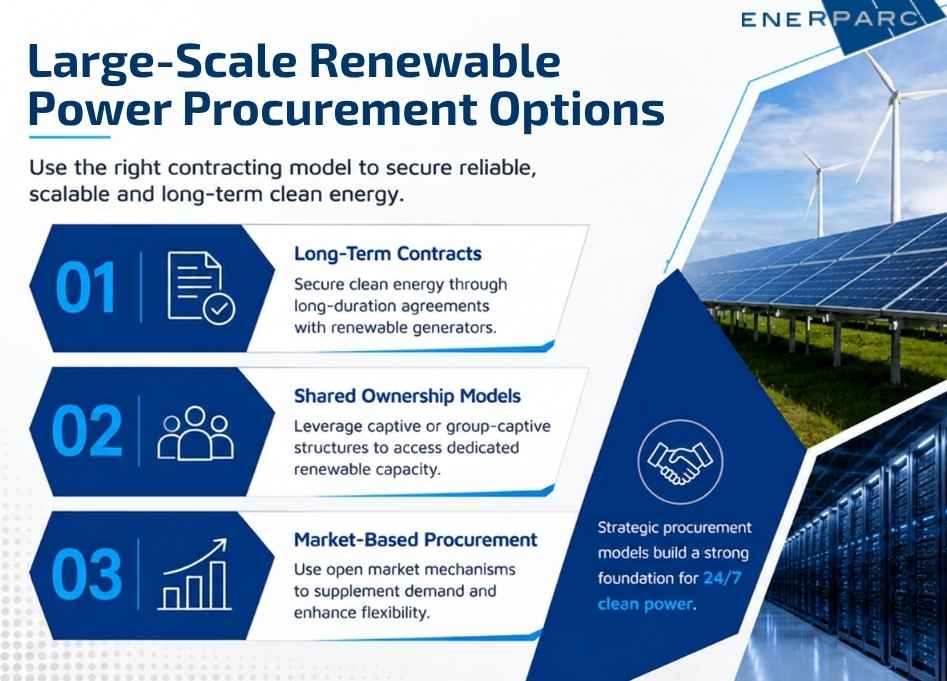
Large and predictable electricity loads can support long-term renewable procurement arrangements.
1. Long-term PPAs
A power purchase agreement, or PPA, is a contract to buy electricity from a generation project. Renewable PPAs can provide a clear way to secure renewable power.
2. Captive and group-captive models
Captive structures allow eligible consumers to own part of a generation project. They must also meet applicable requirements. Group-captive structures can involve multiple consumers sharing project ownership.
The right model depends on the load and regulations. Project structure and commercial goals also matter.
Large, predictable loads can suit long-term captive, group-captive, or PPA structures.
3. Trading and market procurement
Market procurement can complement contracted renewable supply when generation and demand differ. It can provide additional flexibility alongside renewable projects and storage.
The right combination depends on the data centre’s load profile and project location. The grid framework and storage strategy also matter. These factors also influence how operators approach data centre decarbonisation.
Why Should Renewable Capacity Match the Data Centre’s Load Profile?
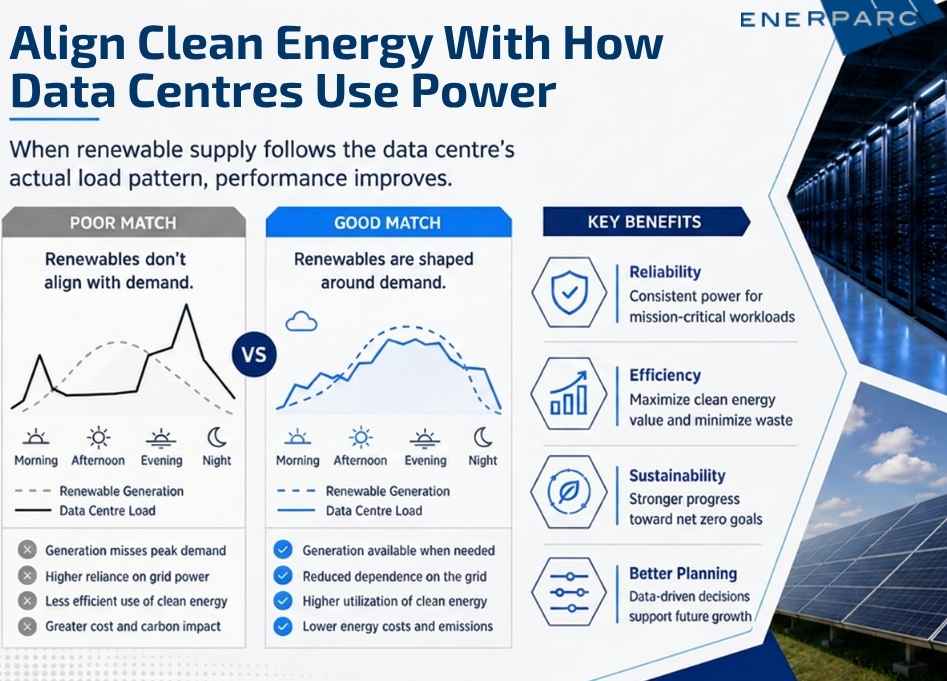
Renewable capacity should reflect how the data centre actually consumes electricity. A 100 MW renewable project can’t provide 100 MW during every hour.
Generation changes with resource availability, while data centre demand can remain high. Operators should therefore assess hourly demand, peak requirements, generation profiles, and storage needs.
Grid availability also needs to be assessed before finalising the renewable energy strategy. This prevents capacity decisions based only on annual electricity consumption.
Energy efficiency matters alongside renewable procurement. Power Usage Effectiveness, or PUE, measures data centre energy performance. ISO/IEC 30134-2:2026 provides the current international framework for calculating PUE.
Reducing unnecessary facility energy demand can also reduce the renewable capacity required.
What Should Data Centres Plan Before Scaling Renewable Power?
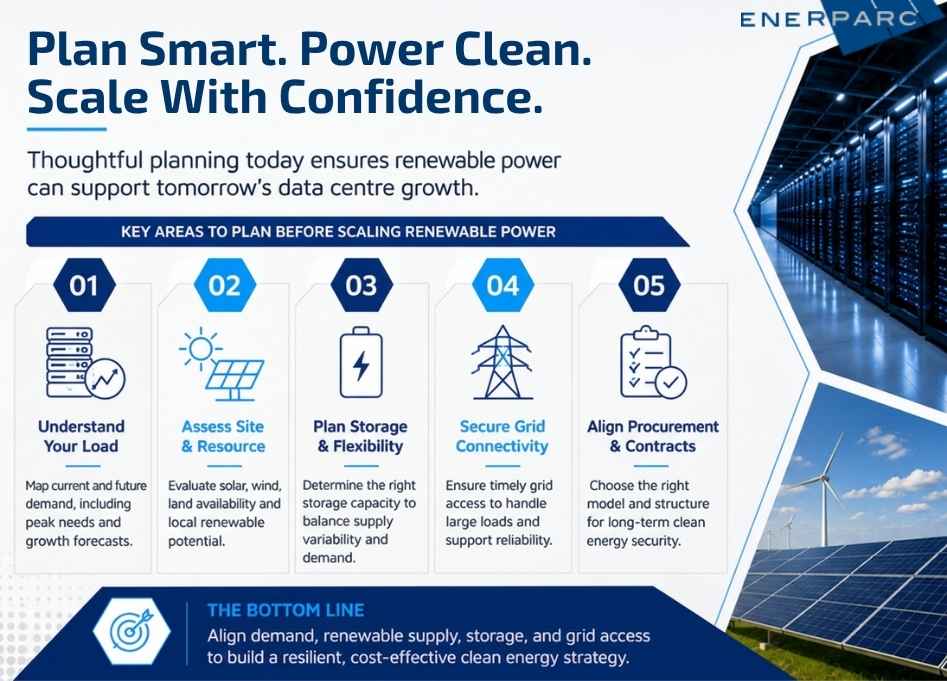
India’s Green Energy Open Access framework gives eligible consumers access to renewable power. For large data centre loads, operators should check which open access rules apply to their project.
Eligibility is only one part of the planning process. Operators must also assess grid access, project timelines, charges, and applicable state regulations.
Future AI demand deserves equal attention when renewable infrastructure is planned.
Harish also highlights the need for early planning. He mentioned that AI load growth can outpace renewable infrastructure. He also says future load growth should be part of the energy strategy from day one.
A renewable strategy should allow for more generation and storage as demand grows. Early planning can help keep the energy strategy aligned with the facility’s growth.
Scale Renewable Power Around the Load, Not Just the Plant
Scaling renewable energy for data centres starts with understanding the load. Operators need to assess when electricity is needed, not just how much they use each year.
Solar, wind, storage, grid access, and procurement can work together to meet that demand. Each facility will need a different combination based on its operating profile and growth plans.
For AI-driven data centres, future scalability should shape energy decisions from the start.
Frequently Asked Questions (FAQs)
1. Can data centres run on renewable energy?
Yes, data centres can run on renewable energy. However, data centres require uninterrupted 24/7 power to operate. They can use on-site generation, long-term power contracts with data centre clean energy grids, and battery storage to meet this need.
2. Which renewable energy source is most commonly used for powering data centres?
Solar and wind are the most commonly used renewable energy sources for data centres. These sources can be paired with grid electricity and Energy Attribute Certificates (EACs) to match consumption. You can also secure direct Power Purchase Agreements (PPAs) from Enerparc.
3. Can solar power be used for AI data centres?
Yes, solar energy for data centres can be used, but usually as part of a hybrid energy grid. AI data centres need continuous 24/7 power. Solar must therefore be paired with battery storage or other energy sources. These sources can provide power when the sun isn’t shining.
4. How many solar panels would it take to power a data centre?
Powering a data centre entirely with solar is rarely practical. Data centres have high, continuous power demands, while solar generation is intermittent.
A 100 MW data centre could need around 4 million 500W solar panels to run continuously. It would also need large-scale battery storage to provide power at night. The solar and storage system could cover about 1,450 acres.
Data centres need continuous 24/7 power. On-site solar usually offsets only 5% to 40% of their energy use. It mainly helps meet daytime demand.
5. Why do data centres need Battery Energy Storage Systems?
Data centres use Battery Energy Storage Systems (BESS) to support uninterrupted 24/7 operations. BESS can also stabilise power quality and manage high energy demand. These systems bridge the gap between grid failures and emergency backup generators.