31 Oct 2025
7 min read

Pairing solar with battery storage lets commercial and industrial businesses store daytime energy for night-time use, slash electricity costs by 30–50% through peak shaving, and maintain reliable 24/7 power despite grid instability. For round-the-clock operations, solar without storage is only half the solution.
As Indian commercial and industrial (C&I) businesses shift to cleaner energy, solar stands out as the most scalable renewable solution. But the real challenge is maximizing solar use beyond sunlight hours and that’s exactly what solar energy storage systems solve.
– Enables 24/7 power availability by storing excess solar energy for night-time use and outages.
– Reduces overall electricity costs by 30–50% through peak shaving and higher solar self-consumption.
– Improves energy reliability for critical operations affected by grid instability or fluctuations.
– Strengthens sustainability and supports RE100/net-zero commitments with increased clean energy usage.
– Enerparc delivers end-to-end, German-engineered solar + storage solutions across EPC, IPP, hybrid RE, and energy trading.
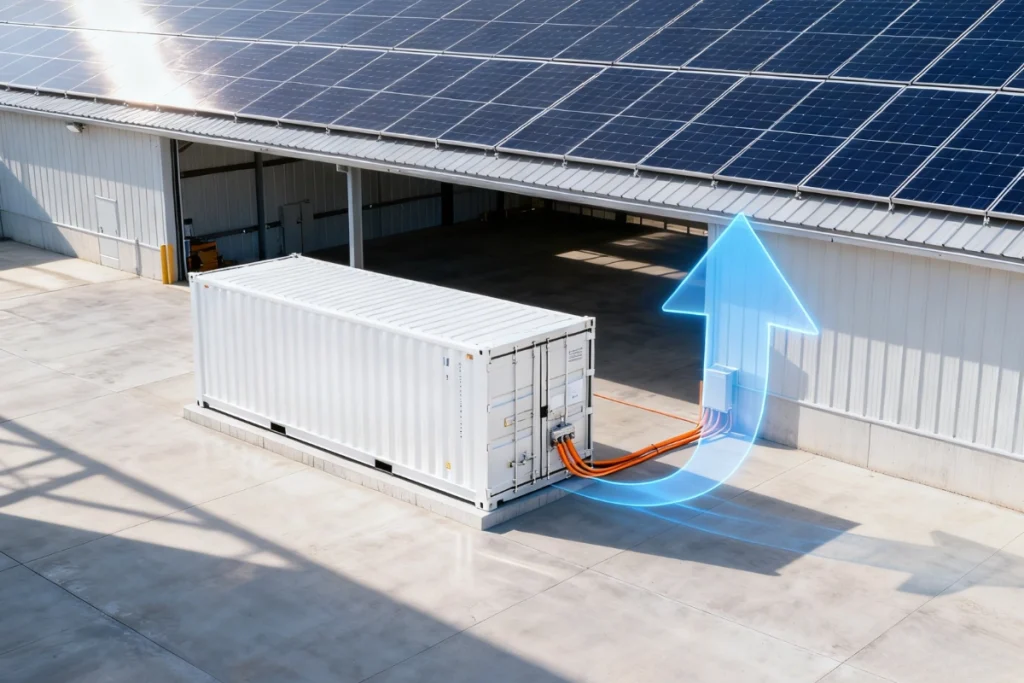
An Energy Storage System (ESS) is a technology that captures energy for use at a later time. In the context of solar power, this usually refers to solar battery storage, where electricity generated during the day is stored and then used during non-sunny hours or when energy demand spikes.
Solar energy storage systems bridge the gap between generation and consumption, ensuring maximum energy self-reliance, lower costs, and enhanced operational efficiency.
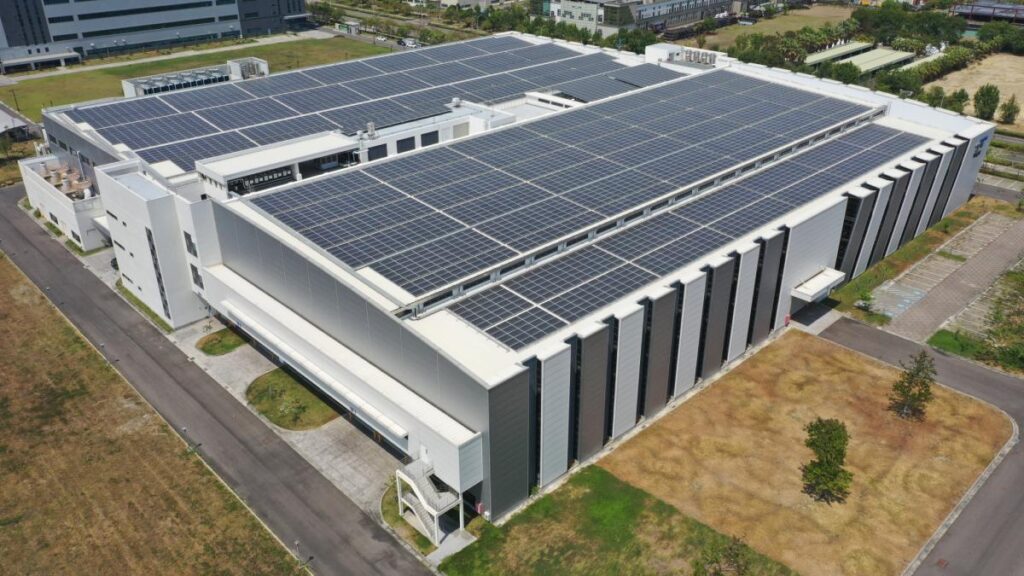
Let’s look at typical energy consumption patterns of commercial or industrial setups—manufacturing units, data centers, commercial buildings, hospitals, etc. Their power demand doesn’t always align with solar generation hours (10 AM to 4 PM). Without storage, excess solar power is either wasted or exported to the grid at minimal value.
At the same time, many parts of India face unstable grid supply, high demand charges, or time-of-use tariffs, making the case for integrating solar battery systems even stronger.
Read More: Solar Panel Lifespan: How Long Do Solar Panels Last for Businesses
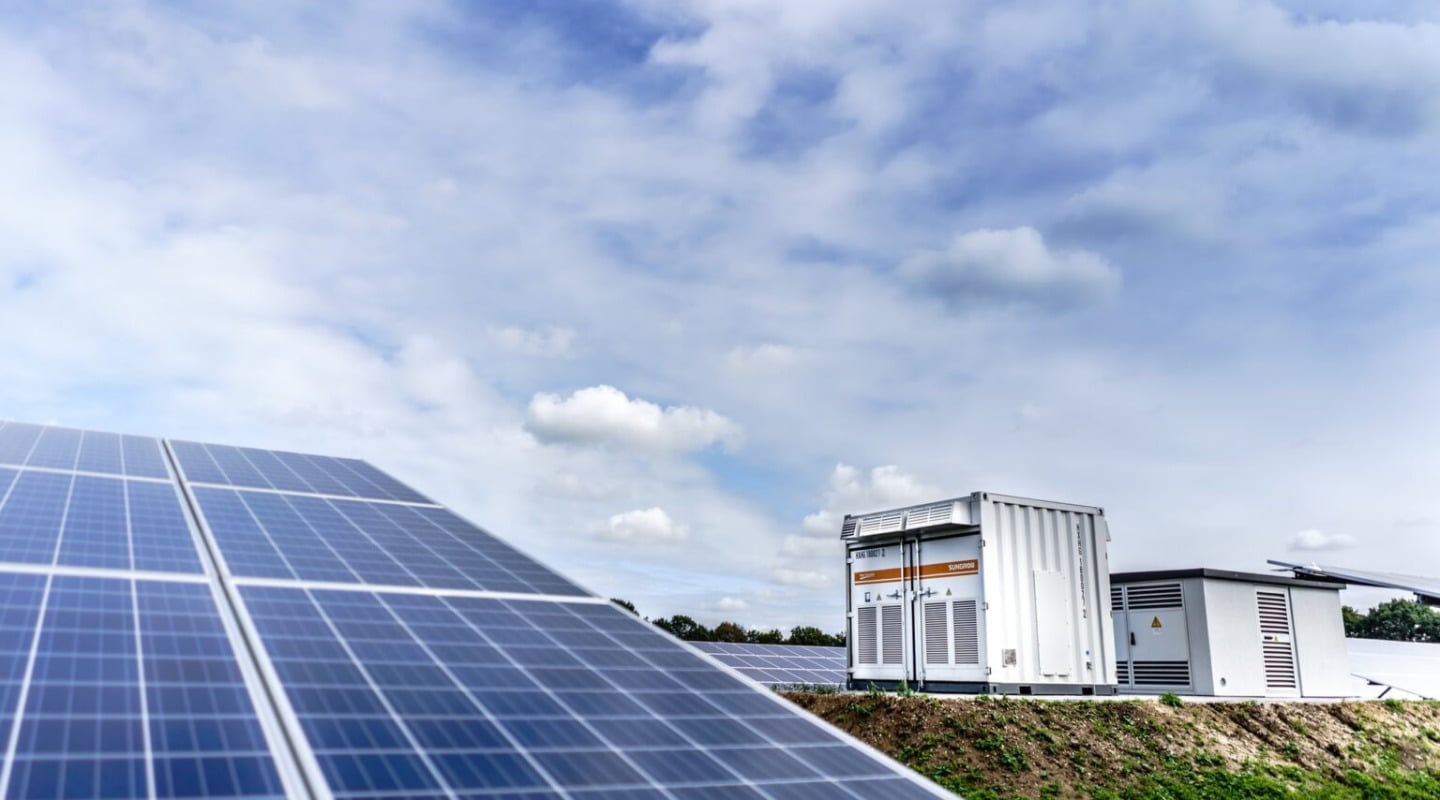
Solar peaks when consumption is often low—weekends, holidays, or non-operating hours. Without an energy storage system, much of this clean power is lost.
With a solar battery system, businesses can:
This shift maximizes return on solar investment and smooths out energy use, making operations more efficient.
One of the most overlooked electricity expenses for C&I users is demand charges—fees based on the highest rate of energy consumption during a billing cycle.
With power storage, businesses can:
Let’s illustrate this with a hypothetical example:
| Location | Avg Industrial Tariff (₹/kWh) | With Solar | With Solar + Battery |
|---|---|---|---|
| Maharashtra | ₹10.5 | ₹6.8 | ₹5.5 |
| Tamil Nadu | ₹9.8 | ₹6.4 | ₹5.2 |
| Gujarat | ₹8.6 | ₹5.7 | ₹4.5 |
| Karnataka | ₹9.2 | ₹6.1 | ₹4.8 |
Figures are indicative and vary by load profiles.
Integrating solar + storage can reduce total blended (Grid + Solar + Battery) electricity costs by 30–50%, depending on peak load, battery size, and state tariff structure.
Power outages and voltage fluctuations are not just an inconvenience—they can disrupt sensitive operations and damage equipment.
A solar energy storage system helps by:
In short, grid independence becomes a reality.
By enabling greater use of clean energy, commercial battery storage:
C&I users can also use storage to participate in green energy markets, buy IRECs, and enhance their carbon offset strategies.
Real-World Example: Enerparc’s C&I Storage Projects
Example 1: Manufacturing Facility, Gujarat
Example 2: Tech Park, Bengaluru
Explore the impact solar can have on your business with our Solar Calculator
Note: There are currently no central government subsidies for C&I solar battery systems in India. However, custom PPA models, CAPEX/OPEX flexibility, and state incentives (in select states) can make projects viable.
Is Solar Battery Storage Worth It for Your Business?
Yes, if you:
Solar battery storage is not just about saving money—it’s about energy independence, operational continuity, and future-proofing your business.
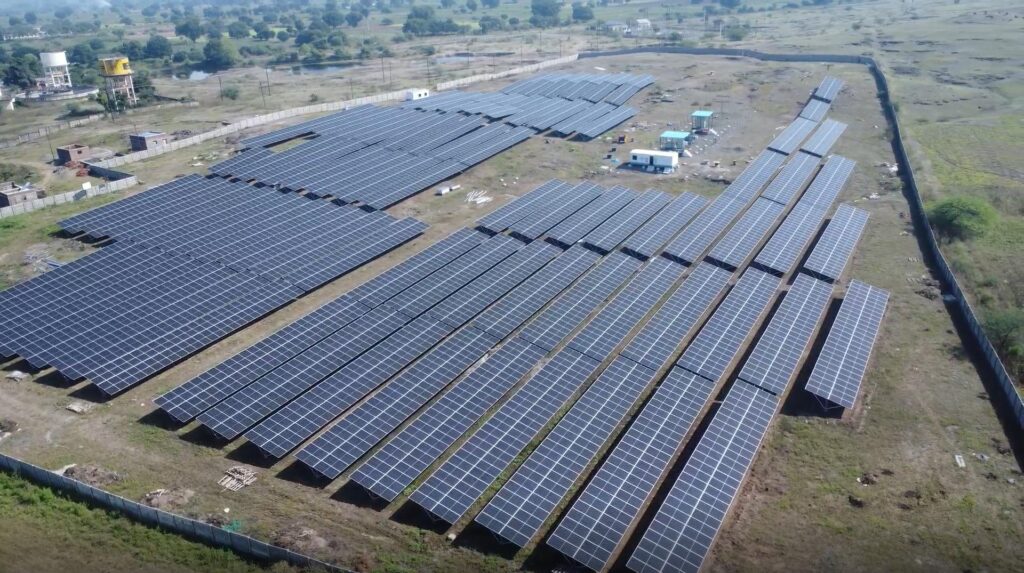
At Enerparc Energy, we bring German engineering excellence and global renewable expertise to every project. As the only German-origin company in India offering a truly integrated decarbonization solution, we go far beyond installing solar panels.
We operate across the entire clean energy value chain:
– IPP (Independent Power Producer) — Building and owning RE assets with long-term commitment
– EPC (Engineering, Procurement & Construction) — Precision-driven execution with quality and speed
– Hybrid RE Integration — Solar, Wind, and Battery Energy Storage Systems (BESS), seamlessly designed for performance
– Energy Trading & EACs — Certified green power supply through market mechanisms and 100% RE tracking
– Intelligent System Architecture — Smart design, grid compliance, and future-ready controls
We don’t just deliver renewable power—we help businesses achieve their RE100 and net-zero goals through bankable, scalable, and digitally optimized solutions. From concept to commissioning and beyond, Enerparc is your long-term decarbonization partner.
Real-time monitoring and O&M services
Use our Solar Calculator to see potential savings.
Need a feasibility report? Contact us today for a customized consultation.
Solar battery storage is no longer a futuristic concept—it’s a practical, essential part of every forward-thinking C&I energy strategy. By combining clean generation with smart storage, businesses can unlock better economics, smoother operations, and stronger sustainability credentials.
Also Read: Salt Water Battery: The Eco-Friendly Energy Storage
A solar energy storage system uses battery technology to store excess solar power generated during the day and supply it later during night hours, peak tariff periods, or grid outages — ensuring higher solar utilization and reliable power.
Depending on the state tariff, load pattern, and battery size, commercial and industrial users typically save 30–50% on total blended (grid + solar + battery) power costs through peak shaving and higher self-consumption.
Yes adding storage ensures that unused daytime solar is not wasted or exported at low tariff rates. It lets you use your own solar power at night, during peak tariff hours, or during outages, significantly increasing ROI.
There are no central government subsidies currently for commercial and industrial users. However, CAPEX/OPEX models, customized PPAs, and selective state-level incentives still make storage projects financially attractive.
Businesses with high demand charges, night-time or critical operations (IT, manufacturing, hospitals), frequent grid issues, or strong sustainability goals see the highest value from adopting solar + storage systems.