The module mounting structure is the critical foundation that determines a ground mount solar plant’s stability, durability, and output over decades. Choosing the right configuration of fixed tilt, seasonal tilt, or single/dual-axis trackers and durable materials like Galvalume, Posco steel, or hot-dipped galvanized steel, combined with a robust foundation, protects your system from wind loads, soil movement, and harsh weather. Professionally engineered structures are what separate a reliable utility-scale plant from an underperforming one.
Building durable, efficient ground mount solar power plants begins with one critical component: the module mounting structure. These structures ensure the longevity, stability, and output of a solar project. The first step is establishing a robust foundation through methods like pile foundations or ramming for long-term structural integrity under varying conditions.
Key Takeaways :
– Ground mount solar module structures are essential for improving solar plant stability, durability, and energy efficiency in India.
– Fixed tilt, seasonal tilt, single-axis, and dual-axis tracker systems help optimize solar power generation based on project needs.
– High-quality materials like Galvalum, Posco steel, and galvanized structures increase corrosion resistance and long-term performance.
– Proper foundation and structural design protect ground-mounted solar systems from wind loads, soil movement, and harsh weather conditions.
– Professionally engineered solar mounting structures improve the reliability, lifespan, and overall performance of commercial and utility-scale solar projects.
Also Read: Ultimate Guide to Ground Mount Solar Systems
Solar Module Mounting Structure Types
Based on the design of the plant and the cost constraints involved, different types of solar mounting structures may be used while carrying out ground-mounted solar plant installation. Here, we detail the specific types of solar mounting structures and module mounting systems that are used in ground mount installations.
Fixed Tilt Structures:
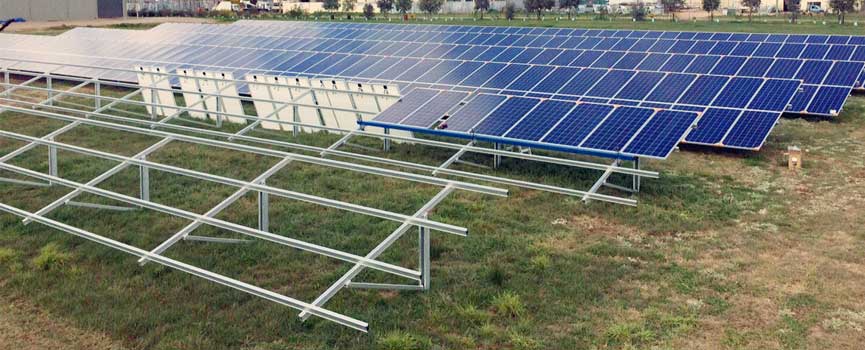
With Fixed Tilt Structures, the modules are raised on structures made of Galvalum or Posco solar mounting structure, Posco steel, Galvalume structure. These are held firmly to the ground with a strong foundation ground-mount solar system. The Fixed Tilt structures are designed at a year-round optimum tilt, as the tilt of the modules cannot be changed once the structures and modules are installed with a fixed tilt mounting system. They’re widely used in commercial and utility-scale ground mount solar projects due to their simplicity and cost-effectiveness solar PV installation, solar racking system.
Seasonal Tilt Structures:
These structures have holes drilled into the bow of the base supporting structure adjustable solar mounting structure. These holes can be used to manually vary the tilt of the modules by removing and re-inserting the screws that secure them to the vertical supports seasonal tilt adjustment. The tilt of the modules can be varied from season to season, with changes in the arc of the sun’s path across the sky solar panel tilt adjustment system. In most cases, the tilt of the modules varies with the seasonal changes of summer and winter manual tilt solar system, ground-mount solar.
Trackers:
As a technological upgrade to the seasonal tilt structures, trackers can change the tilt of modules in a more closely calibrated manner solar tracking system. This automates the manual process of physically changing the tilt of the modules to the optimum angles automated tilt adjustment. There are two highly prevalent types of trackers:
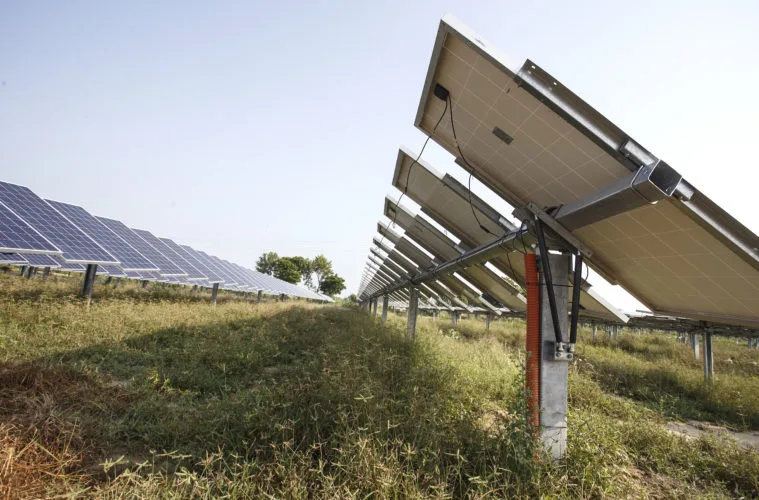
Single Axis Trackers: These permit the movement of the module along a single axis, which can be maintained uniformly along a single row or a block of modules single-axis solar tracker. This can be thought of as lending the module a single axis of rotation. Single-axis trackers can allow the movement of the module along a vertical axis or a horizontal axis solar tracker mechanism . Single axis trackers can also be installed in tiled module installations utility-scale solar tracking.
Dual Axis Trackers: Offer even greater precision by allowing movement on two axes. These follow the sun’s trajectory more accurately, maximizing energy production across all seasons.
Also Read: Balancing Solar Energy and Agriculture for Sustainable Land Use
The Design of Module Mounting Structures
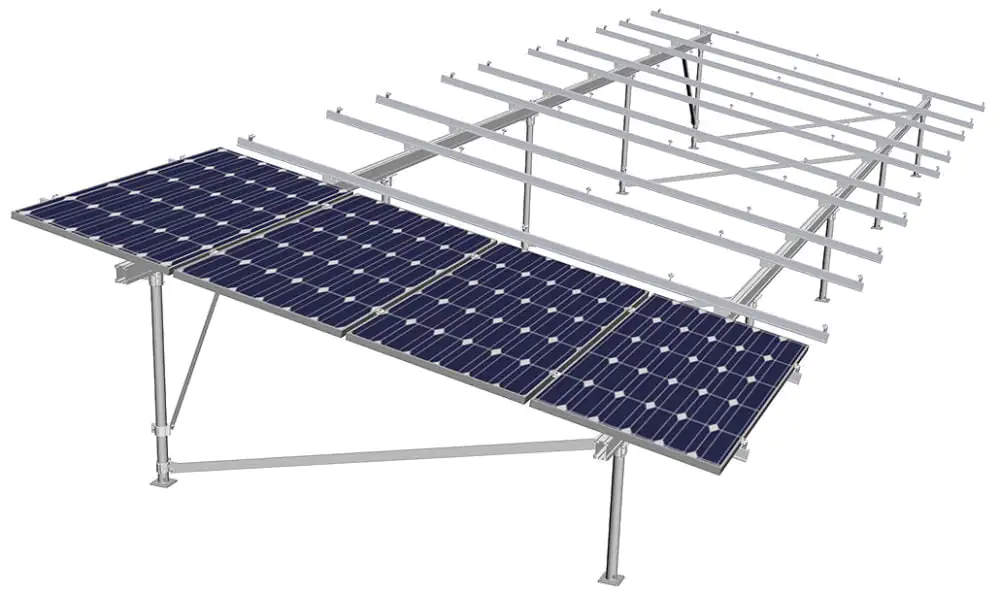
In order to derive highly efficient designs, software tools may be employed, wherein local standards are used for reference. The inputs used are:
- Location (Latitude and Longitude): Latitude and longitude impact the optimal tilt angle.
- Module Dimensions and Weights: With module design changing with rapid technological advancement in terms of Bifacial, Half-cut cells, etc. and increasing capacities of solar modules, the weights and dimensions of the modules must be examined carefully from design to design as they have a critical impact on the structural integrity of the installation.
- Material Selection: Some common materials used in the manufacture of structures are Galvalum, Posco, and hot-dipped galvanised metallic structures. The material must allow for the structure to be sturdy so as to withstand the load of the module and the wind load.
With these inputs, the optimised structure design and reactions for the foundation design are obtained. Once the structure design is approved internally, it is required to be certified by the local chartered engineer.
Thus, the overall technical soundness of the plant can reach high levels of operation only when the module mounting structures are designed and constructed with great care and with close attention to detail. Partnering with the top solar companies in India is vital here!
Also Read: Things to Consider Before Installing a Ground Mount Solar System
Why Mounting Matters in Ground Mount Solar Systems
The efficiency of a ground mount solar installation doesn’t depend solely on the panels—it begins with the structure beneath. A well-designed mounting system ensures the plant’s technical performance and durability over decades.
That’s why working with the top solar companies in India, like Enerparc, ensures you get both high-performance panels and expertly engineered support systems.
Frequently Asked Questions (FAQs)
1. What are ground-mount solar module structures?
Ground-mount solar module structures are support systems that hold solar panels securely on the ground. They ensure stability, proper tilt, and orientation for maximum sunlight exposure and energy generation.
2. What are the main types of ground-mount solar structures?
The three main types are:
- Fixed Tilt Structures – Panels fixed at a set angle year-round.
- Seasonal Tilt Structures – Allow manual tilt adjustments by season.
- Solar Trackers – Automatically follow the sun’s path using single or dual axes.
3. Which materials are best for solar mounting structures?
Durable materials like Galvalum, Posco steel, and hot-dipped galvanized steel are commonly used. They offer high corrosion resistance, strength, and long service life.
4. Why is the foundation important in ground-mount systems?
A solid foundation ensures structural integrity and stability under wind, rain, and seismic conditions. Common foundation methods include pile driving, ramming, and ballasted foundations.
5. How does structural design improve solar plant performance?
An optimized structure design maximizes sunlight capture, reduces shading, and ensures long-term reliability. Proper design also minimizes maintenance and boosts the plant’s operational efficiency.