
A renewable power contract can reduce electricity costs, but the wrong structure can create challenges later.
For you, the better choice depends on electricity demand and future operating plans. Stable demand can favour long-term price visibility, while changing demand can favour procurement flexibility.
So, should you choose a corporate Power Purchase Agreement or green energy trading?
The right choice comes down to your load profile, landed power cost, and future requirements.
What Is the Difference Between a Corporate PPA and Green Energy Trading?
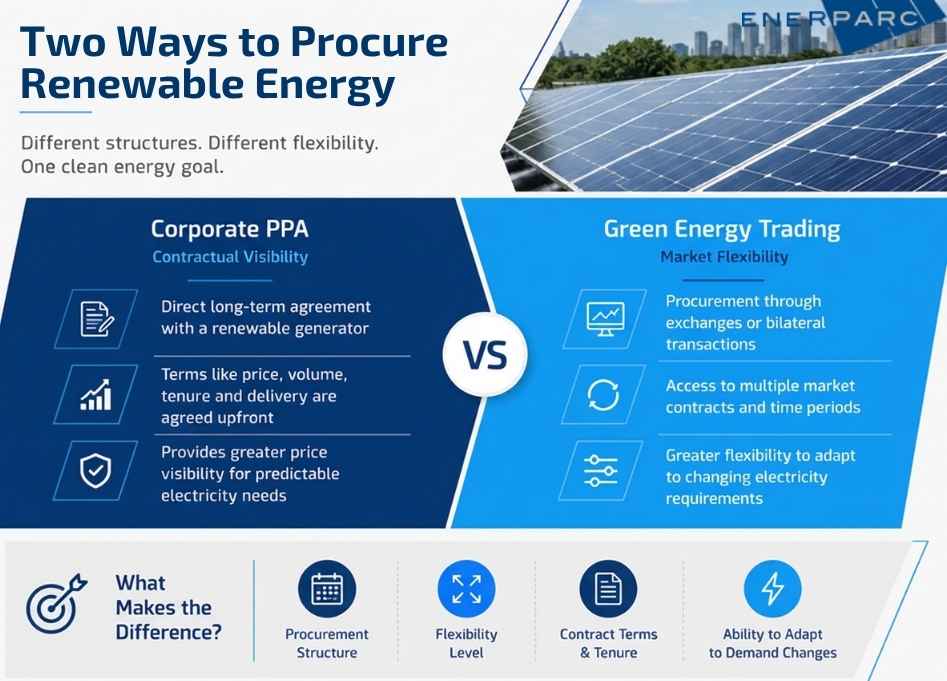
A corporate Power Purchase Agreement is a contract to buy renewable power from an energy producer. It sets terms such as price, volume, delivery arrangements, and contract period.
Green energy trading lets businesses buy renewable electricity through exchanges or bilateral transactions.
The Green Day Ahead Market lets eligible participants trade renewable power for delivery the next day. It also provides more procurement options across different trading periods.
The key difference is the procurement structure and flexibility available to the buyer.
A PPA creates longer-term contractual visibility, while trading can accommodate changing procurement requirements.
India’s Green Energy Open Access framework lets eligible consumers buy renewable power. The rules set the eligibility threshold at 100 kW. Captive consumers have no load limitation.
How a corporate PPA works
A corporate PPA links the buyer with agreed renewable power volumes and commercial terms. These terms can define the price, tenure, delivery point, and contracted quantity.
This structure can provide greater visibility when future electricity requirements remain predictable.
How green energy trading works
Green energy trading provides access to different market contracts and procurement periods. This flexibility can help businesses whose electricity requirements are harder to forecast.
When Does a Corporate Power Purchase Agreement Make More Sense?
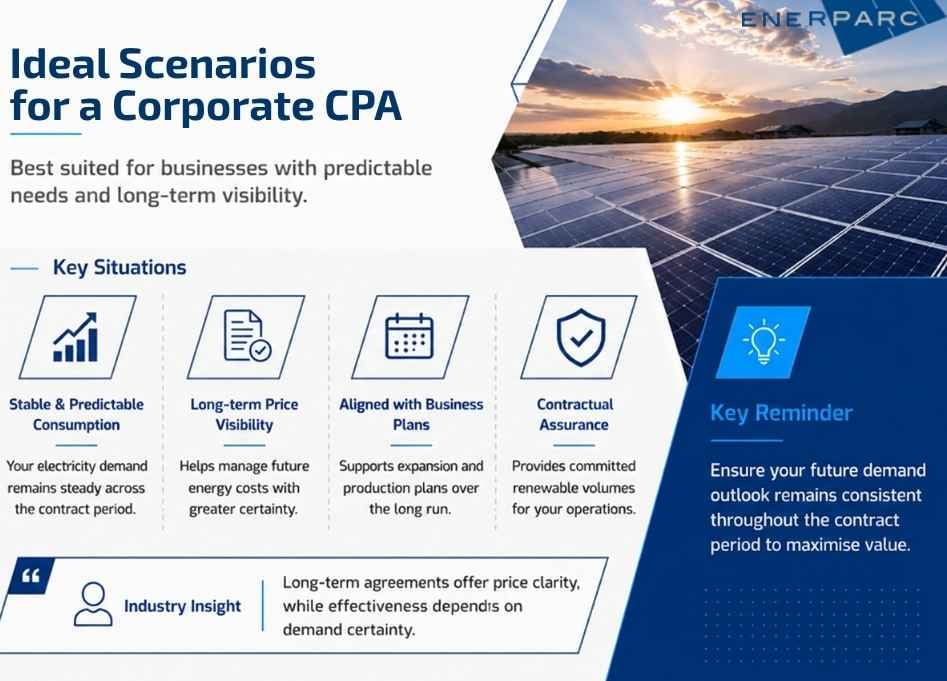
A corporate PPA can suit businesses with large, stable, and predictable electricity demand. It becomes more practical when you can forecast consumption across the contract period.
Long-term procurement can also provide greater price visibility throughout the agreed contract period. However, you need confidence that contracted volumes will remain relevant over time.
Harish Kumar, AGM, Enerparc, explains the trade-off clearly: “A PPA provides long-term price visibility, while green energy trading provides greater volume and tenure flexibility. The right choice depends on the certainty of future demand.”
Before committing, you should review production plans, expansion plans, and expected electricity consumption. A major change in demand can affect the value of a long-term contractual commitment within the renewable energy market.
When Is Green Energy Trading the Better Option?
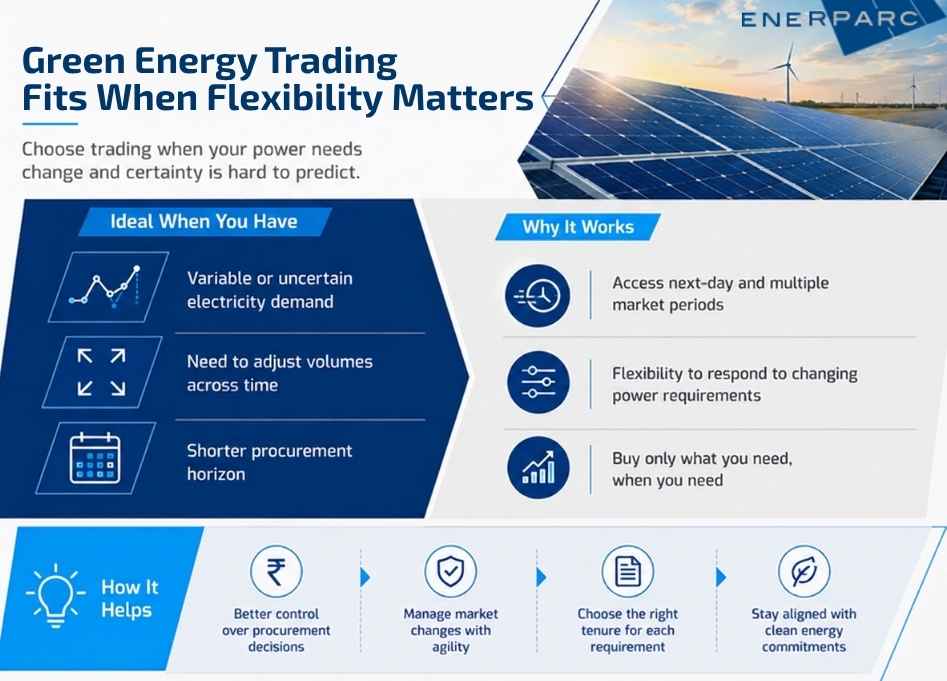
Green energy trading can suit businesses with variable or uncertain demand. It can also help when future electricity requirements are difficult to forecast.
Exchange-based markets offer different procurement windows for eligible participants.
GDAM supports next-day renewable procurement, while G-TAM provides additional market contract options.
This flexibility can matter when electricity requirements change across procurement periods. You should still assess market prices and applicable charges for each procurement decision.
The value of this flexibility depends on how predictable your future electricity demand is.
Corporate PPA vs Green Energy Trading: What Should You Include in the Cost Comparison?
The renewable energy tariff shouldn’t be the only number in the comparison.
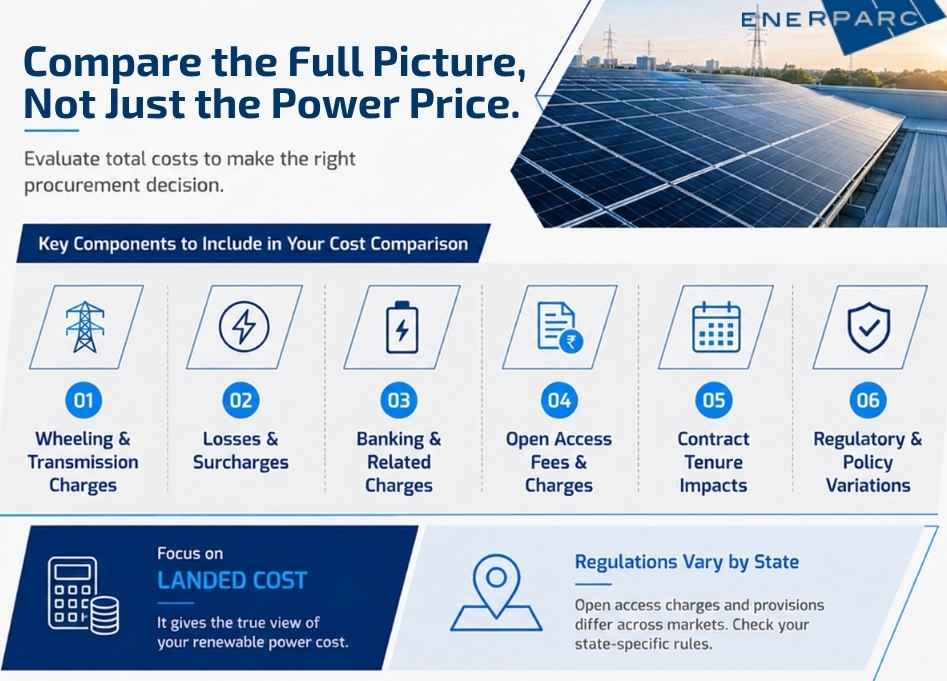
You should evaluate the landed cost. It reflects the broader cost of renewable power. It also helps compare clean energy power purchase options.
Depending on the procurement structure, relevant components can include transmission and wheeling charges. Other applicable costs can include losses, surcharges, banking charges, and related open-access fees.
State-specific regulations also matter because open-access charges and provisions can vary between markets. CEEW’s methodology uses applicable state tariff orders and regulations for its calculations.
Harish highlights another important factor. Open-access charges and banking rules can affect the actual landed cost. Demand changes, contract length, and regulatory changes can also affect it.
Is a Corporate PPA Always Cheaper Than Green Energy Trading?
No, neither option is universally cheaper. You should compare landed costs after applicable charges and commitments.
A lower quoted tariff may not be the best option if contracted volumes exceed actual needs.
A flexible trading model also requires careful review of market prices and applicable charges. These factors matter when comparing Power Purchase Agreement benefits.
How Should You Decide Between Price Certainty and Flexibility?
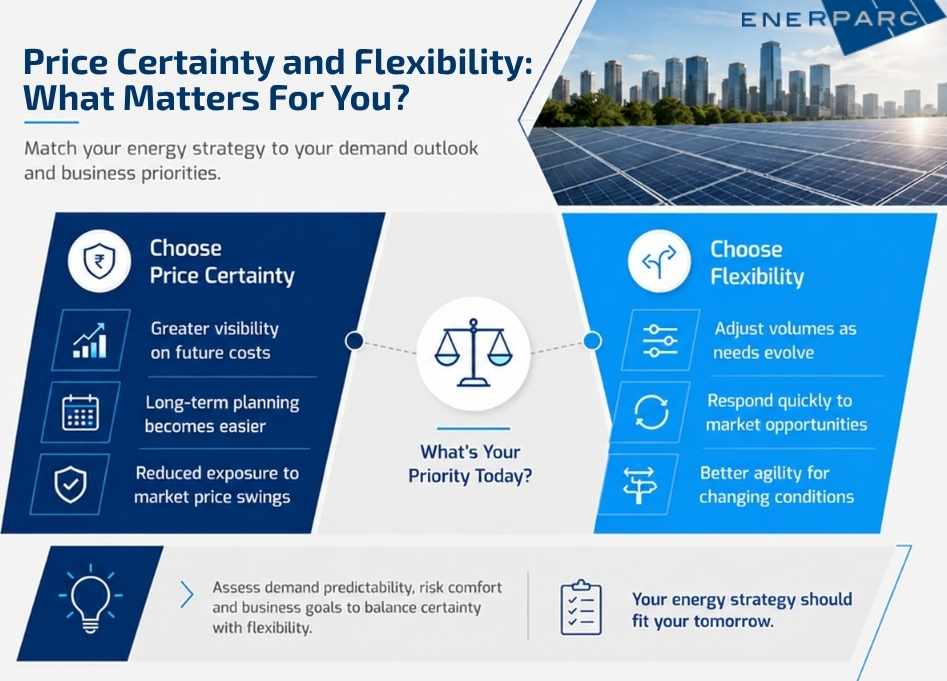
The decision becomes clearer when you compare your demand profile with procurement priorities.
| Business situation | Better starting point |
| Stable long-term demand | Corporate PPA |
| Variable or uncertain demand | Green energy trading |
| Large but evolving demand | Combination |
| Strong need for price visibility | Corporate PPA |
| Need to adjust procurement volumes | Green energy trading |
This framework is a starting point rather than a universal rule. You should also assess tariffs, tenure, creditworthiness, regulations, and renewable procurement goals.
A business with stable long-term demand may find a PPA more suitable. A business with uncertain demand may find greater value in green energy trading benefits.
Detailed load and cost analysis can change the preferred procurement model. In some cases, the assessment may support a PPA, trading, or a hybrid approach instead.
What Risks Should You Check Before Choosing?
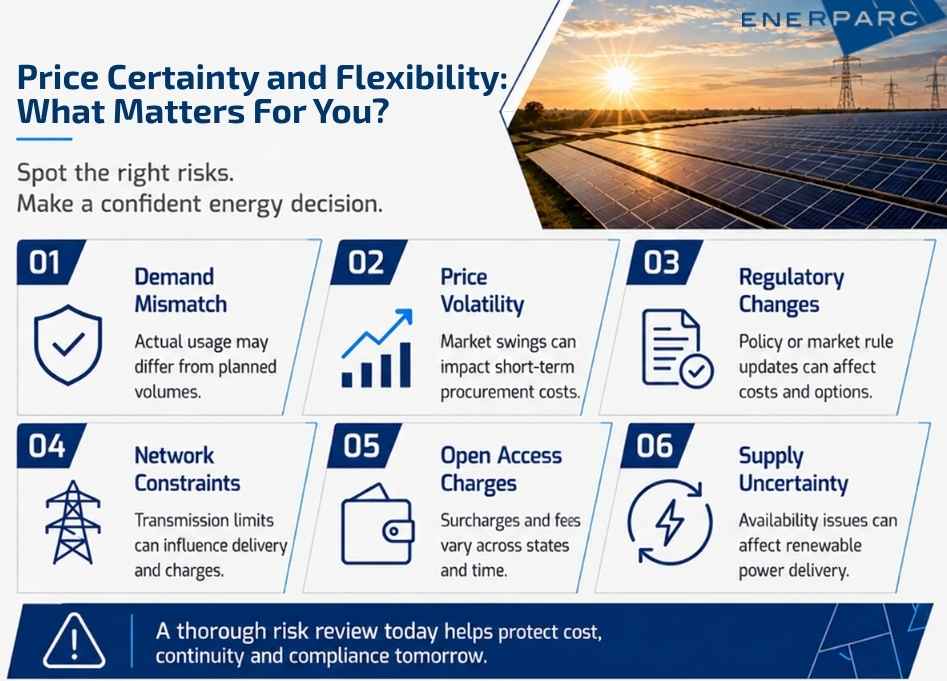
Before signing a corporate PPA, check whether future demand is stable. Demand stability, business outlook, credit profile, and potential load changes all matter.
Contract tenure also deserves careful review because business requirements can change.
The buyer should understand contracted volumes and the implications of lower consumption.
For renewable energy trading, you should assess market prices and applicable procurement charges. They should also consider how frequently procurement decisions may need review.
Open-access charges and banking provisions can affect the final economics. These factors should be assessed alongside energy prices before selecting a procurement structure.
Choose the Model That Matches Your Electricity Demand
Neither a corporate PPA nor power trading for businesses is always the better choice. The better choice depends on how predictable your electricity demand will remain.
A corporate PPA can suit stable demand where long-term price visibility matters. Green or renewable power trading can suit businesses that need greater procurement flexibility.
Businesses with large but evolving requirements can also consider combining both approaches. Start with demand data. Then assess landed cost and contractual risk.
The right procurement structure should fit your electricity needs over time.
Frequently Asked Questions (FAQs)
1. What is the difference between a PPA and a CPPA?
A Power Purchase Agreement (PPA) is a contract to buy electricity from a power generator. A Corporate Power Purchase Agreement (CPPA) is a type of PPA. It lets a business buy renewable electricity directly from a solar or wind developer.
If you want long-term cost stability and cleaner energy, a CPPA may suit your business needs.
2. What is a renewable power purchase agreement?
A renewable or green Power Purchase Agreement is a long-term agreement. It lets a business buy electricity from renewable sources such as solar or wind. It can help you secure clean energy at an agreed price and support your sustainability goals.