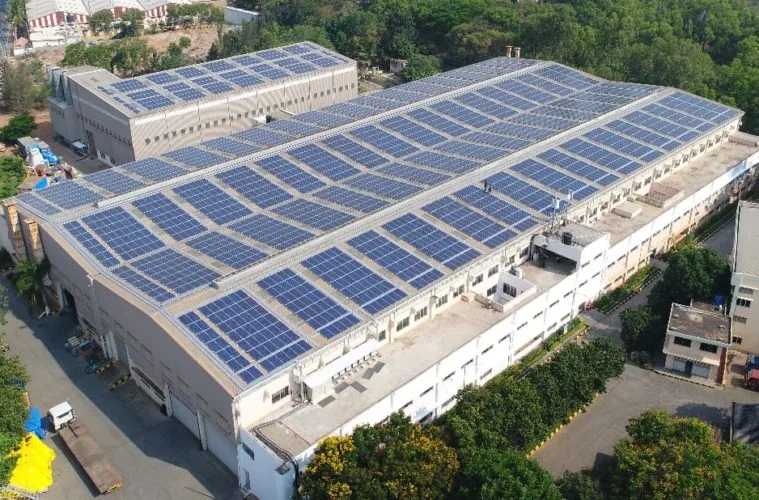
The performance of a rooftop solar system depends heavily on one critical factor that is often overlooked: the roof itself. Roof type, structural strength, shading behaviour, and mounting feasibility all play a direct role in how efficiently a solar system can generate power over its lifetime.
This guide examines how different roof types influence rooftop solar system design, how shading and mounting methods affect energy output, and how proper system sizing supports high self-consumption and long-term returns.
For commercial and industrial facilities, roof design decisions directly influence system feasibility, energy yield, and long-term operational performance.
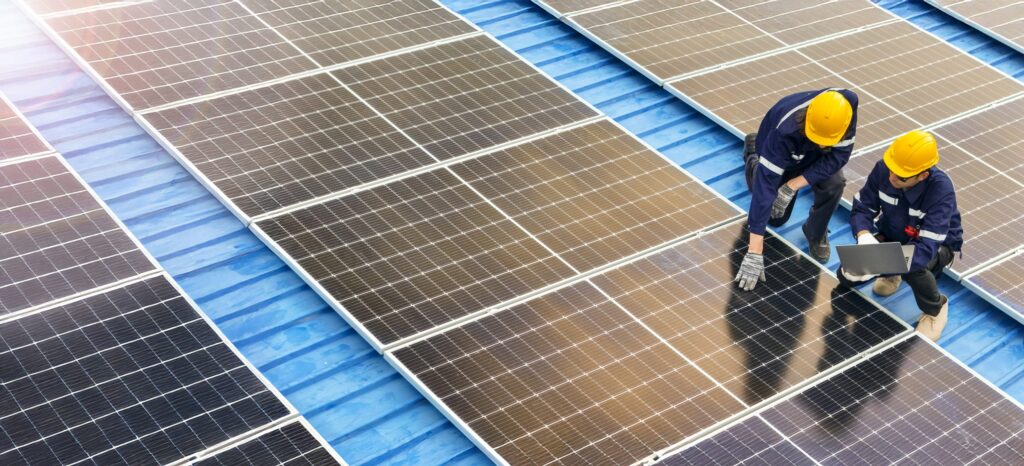
key takeaways
– Both flat RCC and tilted metal roofs can support rooftop solar with proper design.
– Roof geometry can create internal shading that affects system performance.
– Mounti ng structures differ based on roof type and structural strength.
– Solar capacity should stay below minimum daytime load to maximise self-consumption.
– Net metering in India generally allows up to 1 MW per facility.
Roof Types and Design Factors That Influence Rooftop Solar Performance
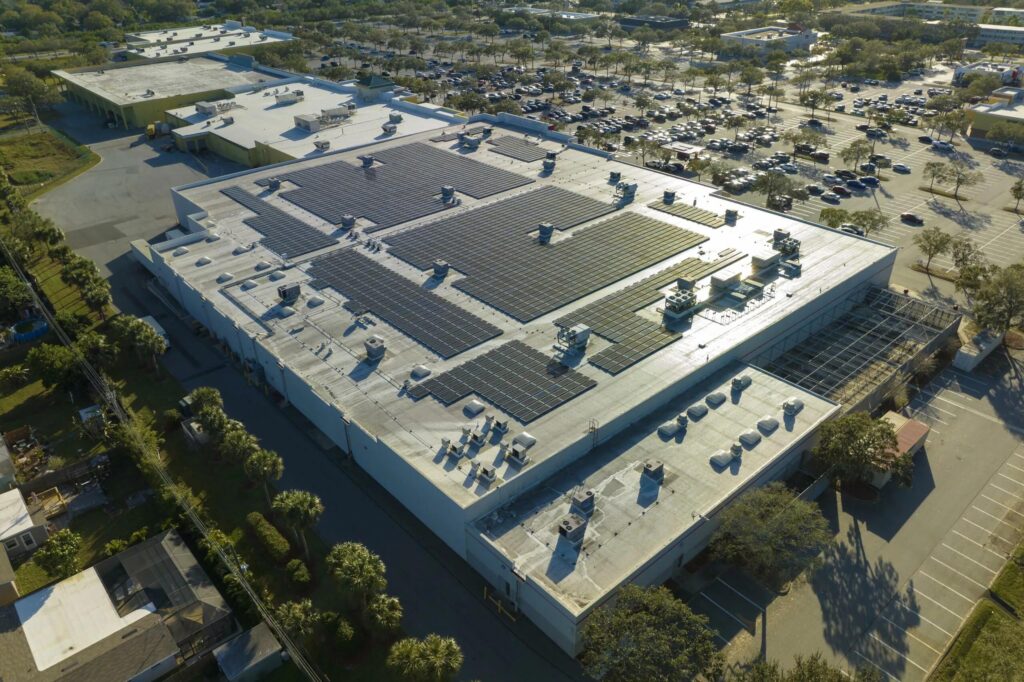
The installation and performance of a rooftop solar system depend on several factors, with roof type being one of the most important. Roof shape, material, and structural strength directly influence module orientation, mounting method, and overall energy output.
From a structural perspective, rooftops are broadly classified into two categories: tilted roofs and flat roofs. Tilted roofs are commonly sheet-based metal roofs, while flat roofs are typically constructed using reinforced cement concrete (RCC). This distinction plays a key role in determining module tilt, mounting design, and spacing requirements.
Tilted roofs can further vary in geometry, including double-slope roofs, raised gable designs, and northern-light glazing. Each roof subtype introduces different design considerations that must be evaluated during system planning.
Roof Geometry and Shading Considerations
Shading is a critical factor in rooftop solar design. Shadows can originate from external obstructions such as trees or nearby buildings, but the roof itself can also create internal shading. Certain roof geometries may cause one section of the roof to cast shadows on another for part of the day, reducing energy generation.
For example, northern-light glazing roofs typically introduce more shading challenges than double-slope roofs. These shading patterns are carefully analysed during the design stage to minimise losses and optimise module placement.
Mounting Structures Based on Roof Type and Strength
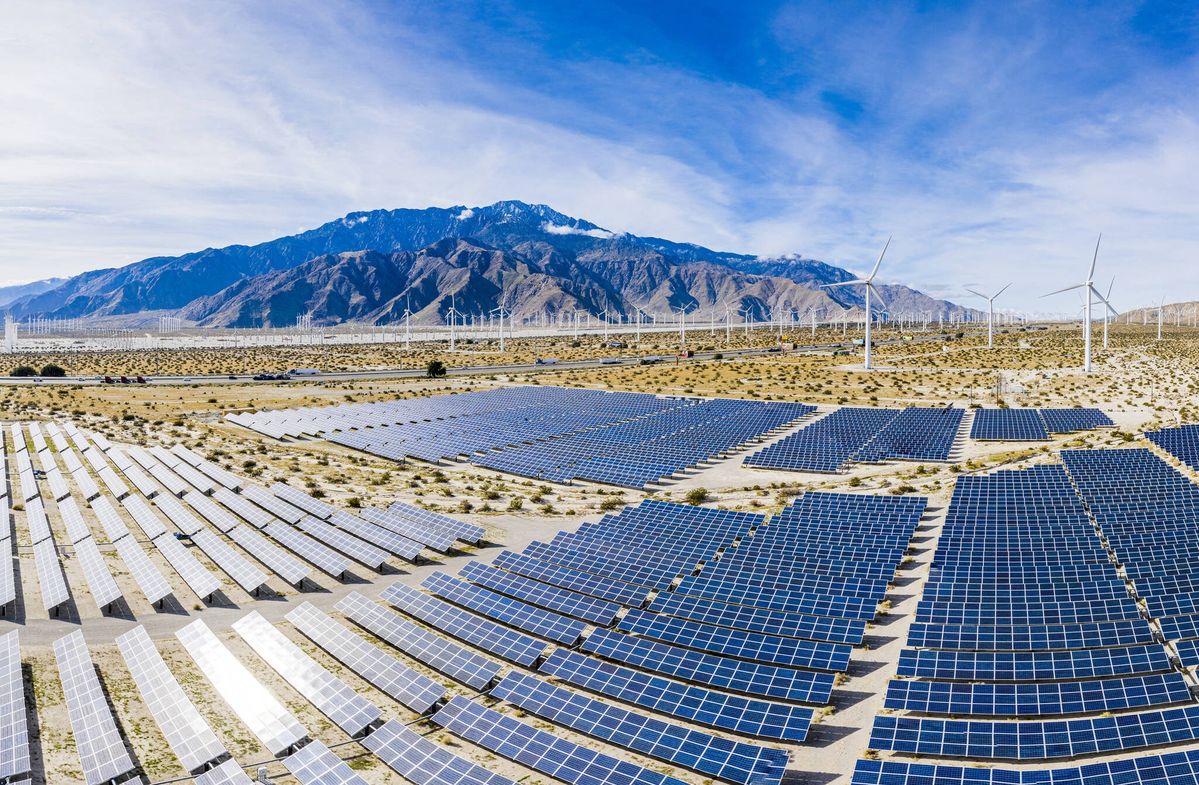
Mounting structures are designed based on both roof shape and load-bearing capacity. Flat RCC roofs usually require raised mounting structures to achieve the optimal tilt angle for solar modules. These structures are engineered to maintain stability while avoiding excessive roof loading.
On tilted metal roofs, solar modules can often be clamped directly to roof ridges or purlins. In cases where the roof is structurally strong and properly oriented, a roof-hugging design may be used. This approach involves securing modules directly to the metal sheet using industrial-grade adhesives, reducing additional structural requirements.
Once these design parameters are finalised, the engineering team develops the system layout, including module arrangement, string configuration, and electrical specifications, to ensure safe and efficient operation.
Discover more: Harnessing the Power of Your Roof With Solar
Designing a Rooftop Solar System to meet your energy needs.
Appropriate sizing of solar power plants is essential to take maximum benefit of invested capital, and ideally size of the solar power plant should be such that the maximum energy generated at any given time of day is less than the minimum load, so that every unit generated is consumed rather than exported to the grid. With net metering policies implemented by most states, energy generated on weekly off, holidays as well as routine maintenance schedules, can be banked and used within the billing cycle. However, with net metering, there also comes a caveat of a maximum installation size of 1 MW per facility.
The energy generation graph below illustrates how system capacity is aligned with on-site energy demand during daytime operations.
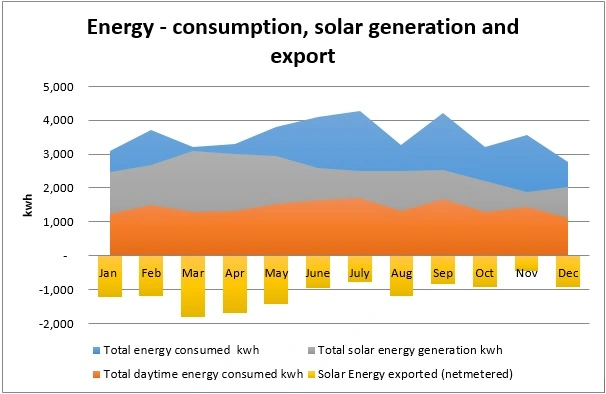
As the above graph shows, the outermost area graph shows the total energy consumed by the particular system. The lower, grey graph shows the capacity that the solar plant is designed for. The maximum generation capacity of the designed solar plant is less than the minimum total energy consumed by the system. The solar energy exported, displayed as distinct bar graphs here, is essentially the difference between the total energy consumed and the total daytime energy consumed.
All in all, a well-analyzed customer need with an ably designed system and professionally executed project, would go a long way in ensuring Maximized returns on investment.
Frequently Asked Questions (FAQ)
1. Which roof type is suitable for solar panels?
Both flat RCC roofs and tilted metal roofs are suitable, depending on structural strength, shading behaviour, and mounting method.
2. Does shading affect solar performance?
Yes. Shadows from trees, nearby buildings, or roof structures can reduce power generation and system efficiency.
3. Do flat and tilted roofs use different mounting systems?
Yes. Flat roofs typically require raised mounting structures to achieve the correct tilt, while tilted metal roofs often allow direct clamping.
4. How is the size of a solar system decided?
System capacity is determined based on minimum daytime power consumption to maximise self-consumption and reduce energy export.
5. Is there a limit on rooftop solar capacity in India?
Yes. Most states allow rooftop solar installations of up to 1 MW under net metering, subject to local regulations.
6. Does rooftop structure limit solar capacity for commercial Buildings?
Yes. Structural load limits, roof geometry, and shading constraints often determine the maximum feasible capacity, regardless of available roof area.