



let’s preserve the environment by using solar panels
Contact Us 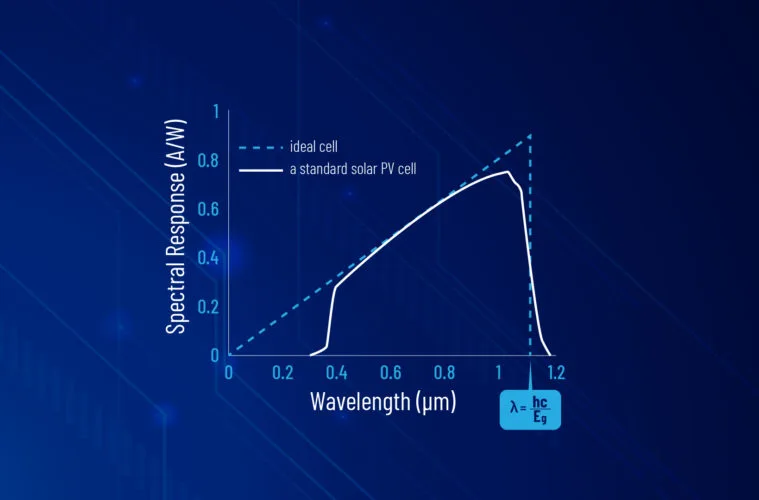
Spectral response measures how efficiently a solar module converts each wavelength of sunlight into electricity one of the most important indicators of real-world performance beyond a spec-sheet efficiency rating. Silicon cells peak around 700 nm and drop off sharply beyond 1100 nm, leaving much of the solar spectrum unused. Metrics like Quantum Efficiency (QE) and External Quantum Efficiency (EQE), plus how temperature and spectrum affect different cell types, are key to choosing the right PV technology with multijunction cells now pushing efficiency higher by capturing a wider range of light.
This guide is for solar engineers, PV system designers, procurement teams, and technically-minded businesses evaluating module performance beyond the basic efficiency number. It explains what spectral response is, how QE and EQE are measured, how silicon behaves across wavelengths, how temperature versus spectral effects differ between cell types, and how multijunction cells overcome single-junction limits.
– Spectral response determines how efficiently a solar module converts different wavelengths of sunlight into electrical energy.
– Metrics such as Quantum Efficiency (QE) and External Quantum Efficiency (EQE) are essential for evaluating wavelength-dependent performance in photovoltaic (PV) modules.
– Silicon-based solar cells show peak spectral response around 700 nm, while efficiency drops significantly beyond 1100 nm.
– Temperature and spectral variations affect different solar technologies differently, with polycrystalline silicon and amorphous silicon modules exhibiting distinct performance characteristics.
– Advanced technologies like multijunction solar cells improve efficiency by capturing a wider range of the solar spectrum compared to traditional single-junction cells.
Spectral response measurements are important in assessing the efficiency of solar modules and overall photovoltaic performance based on energy conversion and how different light wavelengths affect them.
This principle stems from the photoelectric effect, which occurs when photons strike the surface of a material and release charge carriers, producing a current, a key process in modern solar energy conversion.
In a solar module, photons interact with the semiconductor material and promote electrons from the valence band to the conduction band, thus generating a photocurrent, contributing directly to solar panel performance.
This effect, discovered by Albert Einstein, won him a Nobel Prize and was the genesis of solar technology, shaping today’s photovoltaic technology and clean energy systems.

Spectral response refers to the measure of how a material reacts to incident light across various wavelengths, playing a critical role in understanding the performance of materials like solar modules and overall photovoltaic systems. It is often quantified using metrics such as radiant sensitivity, quantum efficiency, and specific detectivity used in solar panel performance analysis. Among these, quantum efficiency is widely used in solar energy studies, representing the ratio of photons absorbed to photoelectrons generated in the output current, making it a key indicator for solar energy conversion efficiency.
Another key metric, External Quantum Efficiency (EQE), measures the ratio of charge carriers collected by the module to the number of incident photons at a specific energy level, helping evaluate solar cell effectiveness and wavelength-dependent response.
Read More: Greenhouse Effect: Causes and Climate Change Impact

Concerning solar modules, spectral response is defined as the ratio of short-circuit current density to incident illumination power as a function of wavelength. Typically the current is in the micro- to milliampere range. When plotted, the spectral response of a solar module will start at around 300 nm and, after going through a series of spikes and dips, will peak at 700 nm. There will be a dramatic drop in response at 1100 nm – this is the maximum wavelength of light for silicon. The uneven nature of the response is since silicon atoms respond efficiently when exposed to specific wavelengths but not as consistently with adjacent wavelengths.
Studies show that the influence of module temperature, has more impact on polycrystalline silicon modules than the solar spectral effect. In particular:
Polycrystalline silicon modules exhibit 15%-20% effect of temperature on performance, while the effect of spectrum is not greater than 3%.
On the other hand, in amorphous silicon modules, the temperature effect accounts for 8%, while the spectral effect equals 12%.
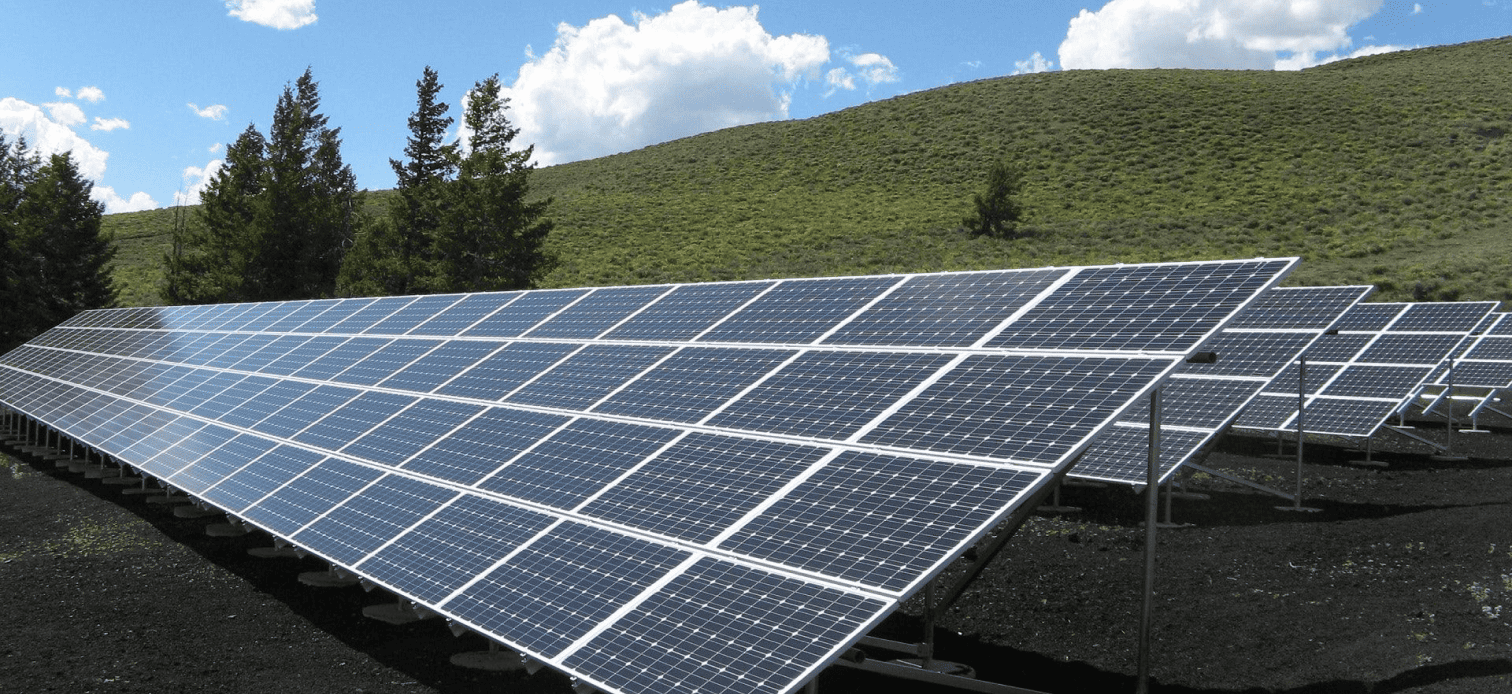
A solar module is made up of individual solar cells connected in series. The solar cells themselves are made up of silicon, a semiconductor. When sunlight is incident on solar cells, the electrons in the valence band of the silica that constitutes the solar cells are excited into the conduction band, triggering electron flow. PV cells wherein only photons that have energy equal to or greater than the bandgap of the cell material can trigger current flow are known as single-junction PV cells.
The disadvantage of these cells is that lower energy photons do not trigger any current flow. To employ the energies of these lower-energy photons, multiple (two or more) different cells may be used, thereby bringing multiple band gaps and junctions into play. Such cells have improved efficiencies, as they convert a larger fraction of the incident sunlight into electrical energy. A majority of such “multijunction” cells use gallium arsenide independently, or in conjunction with other materials.
In addition to technology, improvements to specific components and structures in existing technology can provide better efficiency on solar modules or other solar panel configurations. Due to continuous development and emerging advances in research, the potential for solar energy utilization is increasing.
As the use of multijunction solar cells increases, the prospect of improved efficiency for the renewable industry seems very close. This will result in reimagining renewable energy as more affordable and accessible.
Looking for solar energy solutions to power your business efficiently? Enerparc, a trusted name among solar energy suppliers, offers cutting-edge solar solutions tailored to your needs.
Explore our innovative solar technologies and take a step towards sustainable energy. Visit Enerparc today!
Spectral response refers to how efficiently a solar module converts sunlight into electricity at different wavelengths. It helps determine how effectively a solar panel performs under varying sunlight conditions.
Spectral response is important because different wavelengths of sunlight carry different energy levels. Measuring it helps engineers evaluate solar cell performance and improve photovoltaic efficiency.
External Quantum Efficiency (EQE) measures how many electrons are generated and collected compared to the number of photons hitting the solar cell. It helps analyze how effectively a solar cell uses the available light.
Temperature can influence the performance of solar cells. Some solar technologies experience efficiency losses with temperature changes, while others may show greater sensitivity to variations in the solar spectrum.
Yes. Advanced technologies such as multijunction solar cells can capture a wider range of light wavelengths, resulting in higher solar energy conversion efficiency compared to traditional silicon solar cells.