
let’s preserve the environment by using solar panels
Contact Us 
Most businesses installing commercial solar recover their full investment within 3–5 years and earn a lifetime ROI of roughly 175% or more. With rising grid tariffs and government incentives like accelerated depreciation, rooftop, ground-mount, and carport solar Panels now pay for themselves faster than ever.
If your monthly commercial power bills keep climbing, solar isn’t just an environmental choice it’s a financial one. This guide shows you how to calculate your solar return on investment, understand commercial solar ROI, find your payback period, and decide whether solar panels are worth the cost for your business.
– ROI measures solar savings vs. investment cost — Solar power return on investment (ROI) shows how much you save or earn from solar panels compared to what you spend.
– Payback period shows when profits begin — Once your energy savings equal your initial cost, the remaining years deliver pure profit. A solar payback period helps businesses understand how quickly they can recover their investment.
– Formula for solar ROI — ROI = (Total Lifetime Savings – Initial Investment – Operational Costs) ÷ Initial Investment.
– Main factors affecting ROI — Sunlight hours, grid electricity rates, panel quality, maintenance costs, and tax incentives all influence your solar ROI.
– Smart planning increases returns — Choosing the right system size, good-quality panels, and regular maintenance helps maximize long-term savings.
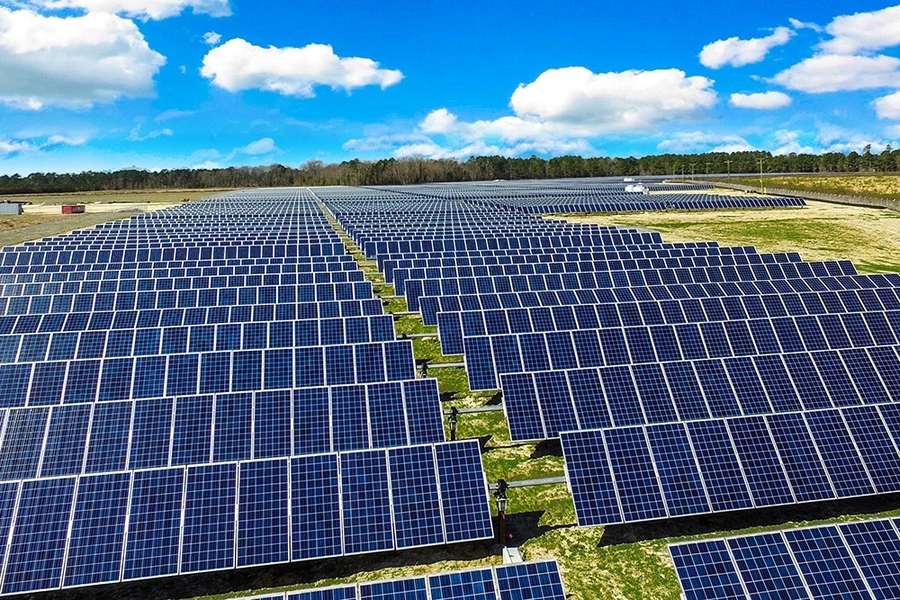
The ROI tells you how much you will get back compared to what you spend on the investment. It’s shown as a percentage. Solar energy return on investment (ROI) measures how much money you save or earn from the solar system compared to how much you paid for it. This means money you save on power bills, the income earned from selling extra power, plus the tax benefits.
Related Post : Cut Energy Costs with Renewable PPAs
This is the period when the savings you get from lowering your power bills outweigh the cost of your solar investment. A solar payback period calculator helps you work this out easily and estimate your solar panel payback period.
For example:
– If your solar system costs ₹10 lakhs
– And you save ₹2 lakhs per year on power bills
– Your payback period is 5 years
After your payback period, all the savings are pure profit.
Finding out if investing in solar energy will save you money is easy with a solar ROI calculator. Follow these steps:
Write down how much money you will spend on purchasing and installing solar panels. Include the cost of panels, wires, and installation labour for your rooftop solar system or Ground Mount Solar.
Have a look at your estimated annual solar panel energy production. Where you live and how much sun you get will affect this. Your solar company will provide you with this information to help calculate solar return in kWh you’ll receive.
You have to calculate how much money you are going to save on solar energy in a year. Take the kWh you use each year and multiply it by your electricity rate. A solar return on investment calculator indicates that if a 500 kW solar PV system produces around 7,20,000 kWh every year, assuming that the grid tariffs are Rs 8/kWh, then profits in a year will be ₹57,60,000.
It takes money and time to clean the panels frequently, as well as repair and replace broken parts. The cost for the yearly maintenance of a 500 kW solar power system is expected to be around ₹2,25,000, while calculating solar power costs.
Your panels are designed to work for the next 25 years. Solar panels generate a bit less power as they grow older, but do deliver a return on investment for solar panels for years after installing them.
Use this formula to calculate your solar ROI:
ROI = (Total Lifetime Savings – Initial Investment Costs – Total Operational Costs) ÷ Initial Investment Costs
For example, let’s say:
– You spend ₹50,00,000 for a new solar system
– You save ₹6,00,000 each year on power bills
– You pay ₹2,25,000 each year as operational expenses
– Your panels work for 25 years
First, find your lifetime savings: ₹6,00,000 × 25 years = ₹1,50,00,000
Next, find your lifetime operational costs: ₹2,25,000 × 25 years = ₹56,25,000
Now use the ROI formula:
ROI = (₹1,50,00,000 – ₹50,00,000 – ₹56,25,000) ÷ ₹50,00,000
ROI = ₹43,75,000 ÷ ₹50,00,000 = 0.875 or 87.5%
Therefore, solar investing gives you an additional ₹0.875 for every ₹1 spent for a period of 25 years. This is an excellent return because you’ll recover your initial investment in about 13 years, and the remaining 12 years generate pure profit.
Related post : Turn Your Roof into a Solar Power Plant with Rooftop Solar
The amount that solar panels can save you depends on several interacting factors. Knowing the key elements helps you make better decisions.
Places with more sun generate more solar power. India receives good solar radiation across most regions, with daily averages ranging from 4-7 kWh/m²/day and an overall average of 5.5 kWh/m²/day. The country enjoys 250-300 sunny days per year, making it well-suited for solar energy. More sunshine means better solar power return on investment on your investment.
When power from the grid costs more, solar saves you more money. As power bills go up over time, your solar savings get bigger. High power prices make solar better.
Better panels make more power and break less often. Good parts last longer than cheap ones. Paying more for good panels now means saving more money for many years.
If you choose the CAPEX model (where you own the system), you can claim accelerated depreciation as a tax benefit. This allows you to depreciate the solar system faster than normal, reducing your taxable income. These savings help improve your return on investment over time.
Solar panels require cleaning and maintenance over time. Areas with regular rainfall need less manual cleaning since rain naturally washes away dust and dirt. Higher-quality panels also need fewer repairs, which keeps your maintenance costs lower.
Read More: Solar Energy Savings: Complete Cost, Benefits & ROI Guide
Smart choices about your solar system can increase your savings. These tips help you get more money back from your investment.
Don’t get too many or too few solar panels. Pick the right number for your needs. Talk to solar experts who can help you choose how many panels you need.
Good solar panels cost more at first, but save more money later. They last longer and generate more power. Cheap panels break faster and cost more to fix.
Clean your solar panels often to make more power. Check them for problems and fix small issues fast. A clean, working system makes more money for you.
Use your devices when the sun is shining. Set timers to run things during sunny hours. This way, you use the solar power when it’s being generated.
Batteries let you save extra solar power for nighttime. Although they cost more money now, they help when the power goes out or when night power costs more money, improving your overall solar power return on investment.
Working out your solar power return on investment helps you make a smart business choice. Most businesses see payback periods of 3-5 years and ROIs of approximately 175% or more across the system’s lifetime.
With rising electricity costs and government support for clean energy, solar power makes more financial sense than ever. Use a solar payback period calculator to see your potential savings.
At Enerparc, our expert team can help you design a system that gives you the best possible return. Take the first step toward energy independence and better profits by calculating your solar ROI today. Get in touch with us now!
Read Post: Solar Energy Savings: Complete Cost, Benefits & ROI Guide
Most commercial solar panels last 25 to 30 years. With regular maintenance and cleaning, they can continue to generate efficient power well beyond their warranty period.
Yes. Solar panels still generate electricity on cloudy days, though output is lower—typically 10–25% of their usual capacity, depending on cloud cover.
Solar panels require minimal maintenance. Regular cleaning (two to four times a year) and periodic inspections ensure they continue performing efficiently.
In many cases, yes. The ability to power your entire operation depends on your energy usage, available roof space, and system size. A professional assessment can help determine the best setup and potential commercial solar ROI.
Yes. Businesses in the UK can benefit from tax reliefs, grants, and schemes that encourage renewable energy use, such as the Smart Export Guarantee (SEG). These incentives can also affect the overall solar investment return.