
let’s preserve the environment by using solar panels
Contact Us 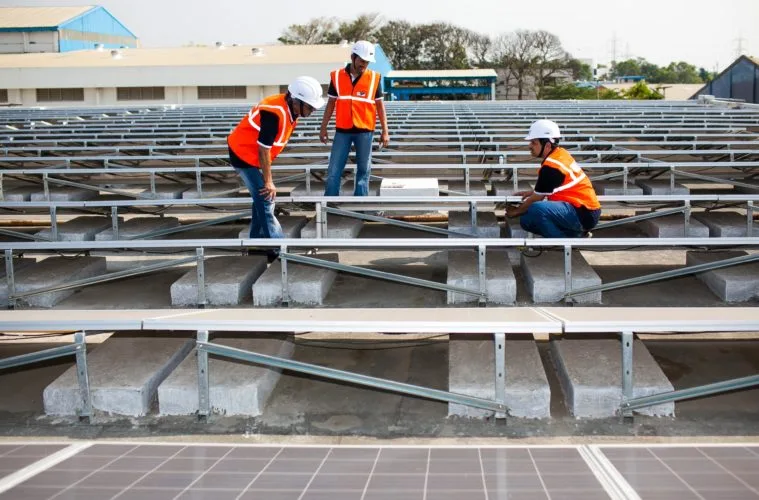
Module mounting structures (MMS) are the support frames that hold solar panels at the optimal tilt for maximum energy generation while resisting wind and weather loads. Your roof type flat, trapezoidal sheet, standing seam, or tiled determines the right MMS design, and material strength (galvanised steel or aluminium) ensures durability. Proper load and shading analysis during design is critical for structural safety and performance, making expert engineering essential.
Several design elements go into an efficient solar system, and among the most important is the module mounting structure. This guide explains why MMS matter, the types suited to each roof, and the key design considerations for a safe, high-performing installation.
– Module mounting structures (MMS) are essential for supporting and tilting solar panels to the optimal angle for energy generation.
– Roof type determines the MMS design – flat, sheet, standing seam, or tiled roofs each require unique rooftop solar mounting solutions.
– Material strength matters: galvanised steel and aluminium offer durability, corrosion resistance, and longevity for solar module mounting structures.
– Proper load and shading analysis during design ensures structural safety and improved performance.
– A well-engineered MMS increases system reliability and efficiency, making it vital to consult qualified solar engineers for rooftop solar installations.

Due to the structure of the modules themselves, they are required to be mounted on another structure. This allows the modules to be held firmly to the surface of the installation, making them capable of battling strong winds that could, without careful design of the solar panel mounting structure, damage the entire installation.
Additionally, in order to raise the overall solar energy efficiency and generation capabilities of the installation, a tilt is afforded to the modules of the system based on the geographical location and the positioning of the area of the installation. Now, to achieve higher levels of generation, the optimum tilt of the modules is achieved by raising them on a rooftop solar mounting system. Based on the cost and customer requirements, a tracker may be used in ground-mount solar system installations as well, in order to allow for the tracking of the sun’s movement across the sky, and thereby adapt the optimum tilt of the modules.
Mounting structures are sometimes built independently of a roof or ground-mounted solar structure installation. Pole mounts and carports are examples of mounting structures created such that the entire installation is raised several feet into the air, thereby keeping the installation independent of the conventional ground or roof mounting systems.
Read More: Solar Energy Storage for Commercial & Industrial Use
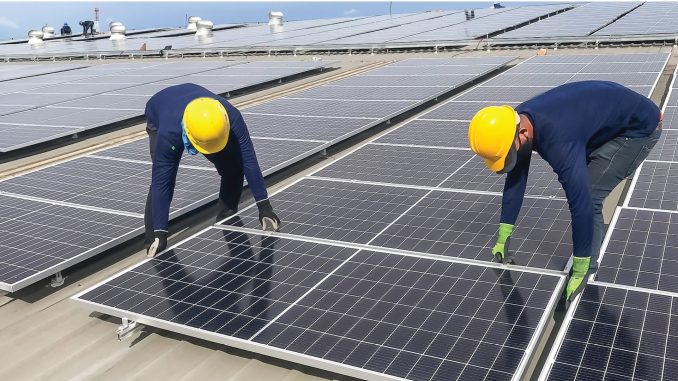
In the case of roof or ground mount installations, the specific type of module mounting structure for solar panels (MMS) uses changes based on the surface of the installation. In rooftop solar systems, flat roofs and tilted roofs require different mounting approaches to ensure proper panel alignment, structural stability, and maximum energy generation. A closer examination of tilted roofs, based on the surface of the roof itself (tiled, corrugated fibre cement, trapezoidal metal sheet, round seam, etc.), dictates if clamps, adhesives, or raised structures are required for a particular installation (with specific latitude-longitude coordinates, installation position with respect to the sun’s movement across the sky, etc.).
To design a suitable MMS and its foundation, it is very important to first examine the type of roof under consideration for rooftop solar assessment and MMS design requirements. Here, we cast a brief eye on some standard roof types:
Flat concrete roof: For a flat concrete roof, a module mounting structure (MMS) is extremely important because it allows the solar modules to be tilted at an optimal angle for the specific installation and maximum energy generation. A non-penetrative ballast foundation is commonly used to resist wind uplift acting on the modules and to provide effective wind load resistance. The mounting structure is raised on this foundation, ensuring a stable and secure rooftop solar installation.
Sheet roof-Trapezoidal: For a trapezoidal roof, running aluminium rails that may be affixed using an industrial-grade adhesive or long-tapping screws are used. The modules are then fixed with suitable end and middle clamps.
Sheet Roof-Standing Seam: Aluminium rails, to which the modules are affixed, are held to the roof using specific types of standing seam clips, based on the roof itself. The modules are affixed to these rails using suitable end and middle clamps.
Tiled Roof: In the case of a tiled roof, where the entire area of the roof is lined with tiles, the MMS is fixed to the roof by using screws that hold the MMS to the purlin below the roof. Suitable end and middle clamps are then used to hold the modules to the structures themselves.
Keep Reading: Rooftop Solar: A Closer Look
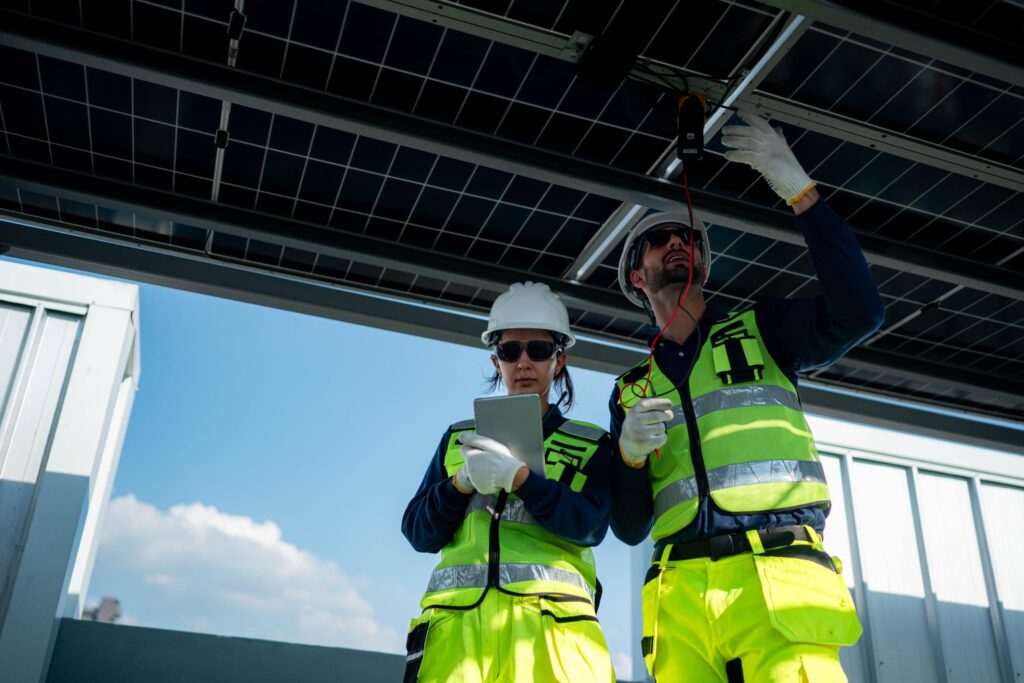
A suitable weight of MMS (i.e., of strong material such as galvanised steel) is used in order to build a structure capable of withstanding wind force for the lifetime of the solar structure plant. A design concern in a rooftop installation is accounting for the weight of the modules, along with the weight of the mounting structures, while carrying out the load-bearing study of the roof. Inputs such as location (latitude-longitude), building height, roof tilt, solar module dimension and weight, type of roof, and fixing methods (e.g., the clamps used to affix the modules to the roof) are used in order to generate guidelines on the structure design, additional dead load on the roof, as well as the dynamic load on the roof. These details allow for the load-bearing capacity of the roof to be calculated.
Additionally, the complete installation is designed while considering the shading constraints created by raising the modules on mounting structures and the potential impact of solar panel shading in ground mounted and rooftop solar systems. Proper inter row spacing is maintained to prevent modules from casting shadows on the panels installed in the succeeding rows, which is an important part of solar layout design. Although these details may seem small, they have a significant impact on overall power generation, solar energy optimization, and long-term solar power efficiency.
It is evident, therefore, that module mounting structures form a critical element of designing an installation that would serve the user steadfastly for the complete lifetime of the installation.
Keep Reading: How Long Do Solar Panels Last for Businesses
A module mounting structure (MMS) is a support frame used to securely hold solar panels in place on rooftops. It ensures proper alignment, tilt, and stability to maximise solar power generation and withstand wind or weather loads.
They maintain the correct tilt angle for optimal sunlight capture, provide mechanical strength, and protect panels from wind uplift or structural stress, directly impacting the system’s energy output and lifespan. A properly designed rooftop solar mounting system also supports long-term system reliability.
The main solar mounting structure types depend on roof design:
Designers consider factors like roof type, height, location (latitude-longitude), module size and weight, wind speed, and structural load capacity. Proper inter-row spacing prevents shading and improves power generation.
Most MMS systems use galvanised steel or aluminium for strength and corrosion resistance, ensuring long-term durability and reduced maintenance requirements.