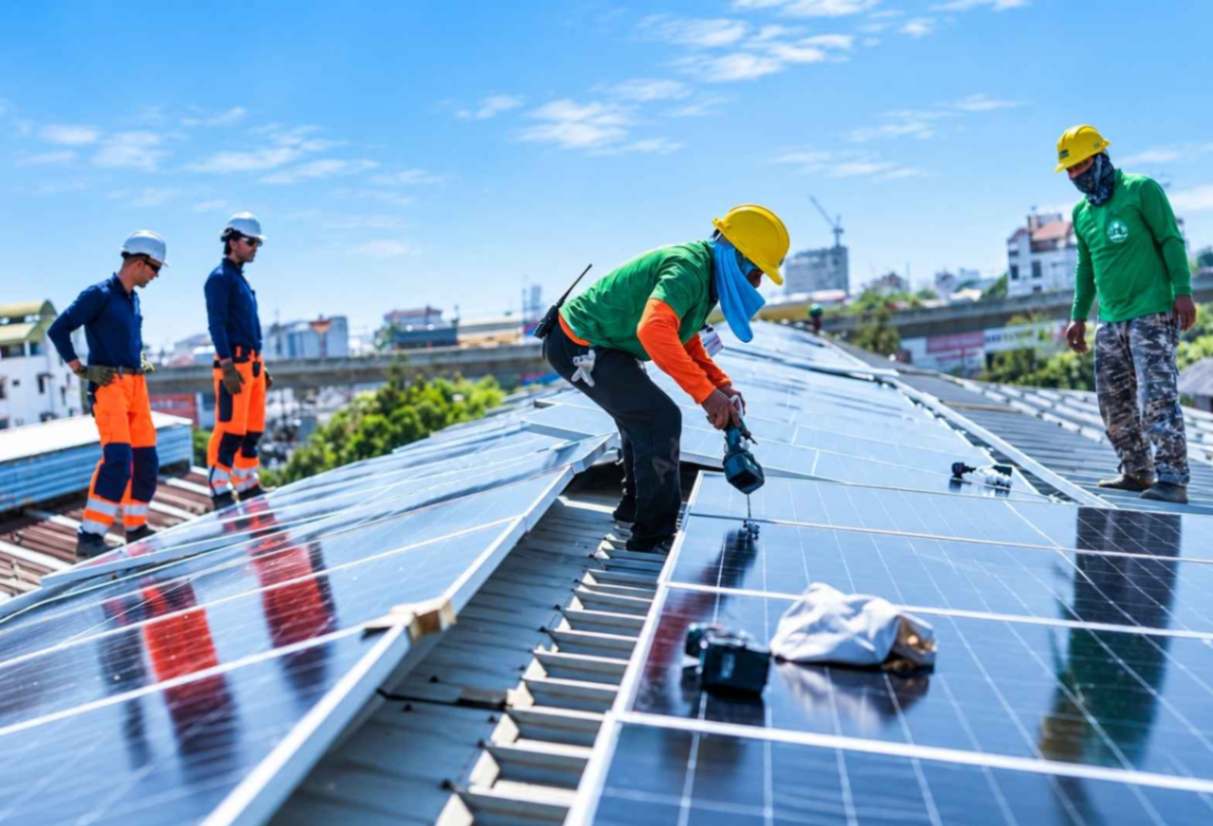

let’s preserve the environment by using solar panels
Contact Us 
Bifacial solar modules generate power from both front and rear surfaces, capturing reflected and diffused light to boost output without expanding system footprint achieving 27–31% efficiency with optimized installation and tracking. Their real performance hinges on surface reflectivity (albedo), elevation, tilt angle, and system design. Higher upfront costs are offset by stronger long-term energy generation and ROI, especially in utility-scale, commercial, and high-albedo environments.
Bifacial solar modules are changing how modern solar plants generate electricity. Unlike traditional monofacial panels, they capture reflected and diffused light from surrounding surfaces, increasing total output. But their real performance depends heavily on surface reflectivity, elevation, tilt angle, and design. This guide explains how they work, what efficiency gains are realistically achievable, how costs compare, and when bifacial delivers the strongest ROI.
– Bifacial solar modules generate power from both front and rear sides for higher energy output.
– Reflective surfaces and high albedo conditions improve bifacial solar panel performance and efficiency.
– Bifacial solar systems can achieve 27–31% efficiency with optimized installation and solar tracking.
– Elevation, tilt angle, shading, and mounting design play a major role in maximizing bifacial gains.
– Although bifacial solar panels have higher upfront costs, they deliver better long-term energy generation and ROI.
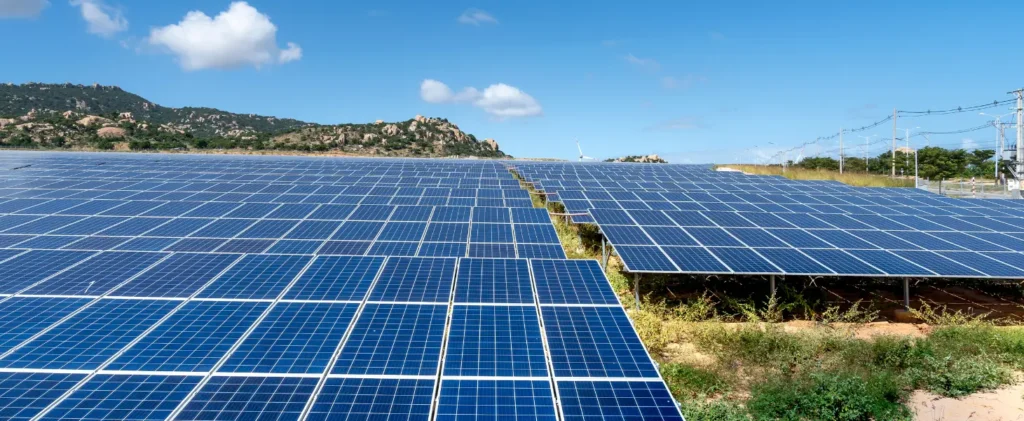
In a bifacial solar module, the presence of the rear PV module allows the reflected irradiation to be employed in energy generation. Therefore, the more reflective the surface of the installation is, the greater is the power generated by the rear PV module.
The performance of bifacial modules is governed by a few key factors.
Albedo of the surface of the installation: Albedo of the surface is defined as the ratio of reflected light to incident light. A highly reflective surface, like fresh snow, has a higher albedo (0.9), which contributes to more irradiation striking the rear PV module, thereby raising the overall performance of the bifacial module. On average, the Earth has an albedo ranging from 0.2 to 0.4.
Local climatic conditions: As with mono-facial PV modules, bifacial modules are also highly reliant on local climatic conditions. However, the bifacial gain is not directly dependent on the total irradiation received at the location of installation. Lower levels of incident irradiation could simply translate to a larger presence of the diffused (reflected) component of the received irradiation. This imbalance serves to up the performance of the rear PV module. Therefore, seemingly adverse local conditions can, in certain cases, be averaged out by the presence of the rear PV module.
Elevation: Elevation above the ground is a crucial component of the installation of bifacial solar panels. The shadow cast by the module forces a drop in the irradiation received by the rear solar PV module. Apart from self-shading, the design of a bifacial solar module-based solar plant should be carried out keeping in mind the shading caused by one module onto the surface of the succeeding module as well. The height at which power saturates is also directly dependent on the time of the day, the light received, the local climatic conditions, albedo, etc.
Optimal Tilt angle: Ideally, bifacial modules with a vertical tilt angle produce the highest electricity. Noise barriers, built with bifacial modules, have proven to be an efficient solution to an otherwise expensive infrastructure undertaking. As expected, the optimum tilt for a bifacial module is greater than the optimum tilt for a monofacial module, so as to accommodate the capture of a larger fraction of the reflected irradiation. Performance can be improved by the utilization of trackers that allow the modules to follow the sun’s movement across the sky, thereby keeping them directed to receive the maximum possible irradiation.
Explore More: Module Mounting Structures: A View From the Rooftop
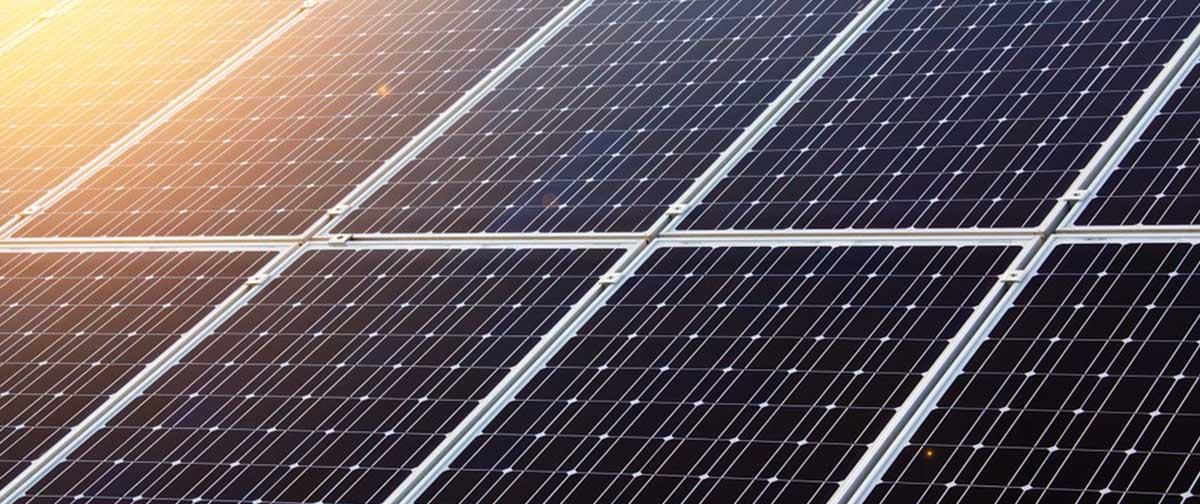
Bifacial and monofacial solar modules differ primarily in how they capture sunlight and how much energy they can produce under similar conditions.
Monofacial modules generate electricity only from the front side, relying entirely on direct solar irradiation. Their performance is predictable and less dependent on ground conditions, making them suitable for standard rooftop and ground-mounted installations.
Bifacial solar modules, on the other hand, generate power from both the front and rear surfaces. The rear side captures reflected and diffused light from the installation surface, increasing total energy output. This additional generation, known as bifacial gain, varies based on albedo, elevation, and system design.
While bifacial systems generally involve higher upfront costs due to specialized mounting structures and electrical components, they can deliver higher long-term energy yields, particularly in utility-scale, commercial, and high-albedo environments.
Module Technology: A module of higher quality corresponds to a higher bifacial factor, which corresponds, as expected, to greater bifacial gain and power generation
Changing surface albedo: Extra costs may be incurred during installation as well as during the operation and maintenance phase if additional work has been done on the surface of the installation to raise the albedo. A change in surface would require maintenance, which would add to the O&M costs of the project.
Cost of modified mounts and electrical components: Bifacial modules must be mounted such that the shading caused by the mounting structures, on the rear PV module, is restricted to a minimum. The inverters must also be adapted to the additional power generation capacity of the bifacial modules.
Bifacial modules represent a veritable leap in the technological capabilities of the solar industry. As the market stands, it may appear that the jury is out on the feasibility of migrating entirely to the bifacial module, given that manufacturing catches up. However, one thing is certain, industrial and commercial solar systems are seeing what marks just the beginning of a race to uncover higher and higher levels of efficiency and power generation of solar cells.
Explore More: Bifacial Solar Panels: Guide for Smart Installation
Bifacial solar modules are mainly used in commercial, industrial, and utility-scale solar projects to increase energy generation and improve efficiency.
Yes, bifacial solar panels generate additional power from reflected sunlight on the rear side, increasing total energy output compared to monofacial panels.
Surface reflectivity, tilt angle, elevation, solar tracking systems, and reduced shading help maximize bifacial solar module efficiency.
Although bifacial solar systems have higher installation costs, they can provide better long-term ROI through higher energy production.
Monofacial panels generate power only from the front side, while bifacial solar modules produce electricity from both front and rear sides.